

 By admin
Haji Lane is a narrow street in Singapore’s Kampong Gelam neighbourhood, known for independent shops, colourful walls, cafés and an easy connection to the surrounding heritage district. It is a good place to wander without a rigid checklist. The street is short, but a thoughtful visit can extend through nearby Arab Street, Bussorah Street and the area around Sultan Mosque.
Its appeal changes through the day. In the morning, you can pay attention to shophouse details and photograph the lane with fewer people. Later, more shops and cafés come to life, while evenings bring a different social atmosphere. This Haji Lane guide helps you decide when to go, how to arrive, what to look for and how to treat a working neighbourhood respectfully.
Where is Haji Lane?
Haji Lane lies within Kampong Gelam, a historic district near the Bugis area of central Singapore. It sits among a network of compact streets with conserved shophouses, places of worship, restaurants and shops. The lane itself is the destination, not a single ticketed attraction with one entrance or opening time.
The nearby Sultan Mosque is a useful visual landmark for orienting yourself, but the lane and the mosque are distinct places. Allow time to explore the surrounding streets rather than walking to a pin on a map, taking a photograph and leaving. The area’s character comes from its mixture of architecture, commerce, food and living cultural institutions.
The name Kampong Gelam is used in official tourism and heritage material; you will also see Kampong Glam in older maps and everyday usage. Both refer to the broader neighbourhood. For a first visit, save Haji Lane and a nearby landmark in your map app so you can find your way through the small blocks without assuming every lane is the same street.
How to get to Haji Lane
Taking the MRT
Bugis station is the usual rail starting point for a walk into Kampong Gelam. It is served by the East-West and Downtown lines, making it practical from many parts of Singapore. Use a current pedestrian map to choose the exit that fits your approach, then follow marked crossings toward the heritage district. Exit advice can vary with the side of Haji Lane you want to reach.
Do not judge the route solely by the straight-line distance between the station and the lane. Large junctions and covered walkways can change the easiest path. If you are travelling with a stroller or need step-free access, check the station’s accessible exits and the walking route in advance. The last few streets are best explored on foot at a relaxed pace.
Nicoll Highway station may also make sense from some journeys, particularly if you are combining the lane with other nearby stops. Compare the actual walking route and train transfers rather than choosing the station that appears closest on a zoomed-out map. A convenient direct train to Bugis can be simpler than a shorter but unfamiliar walk.
Bus, taxi and walking approaches
Several bus routes serve the wider Bugis and Kampong Gelam area, but the best stop depends on where you start. Check a live journey planner for a stop close to your chosen end of the district. Bus routes, temporary diversions and stop arrangements can change, so do not rely on an old list of service numbers.
A taxi or private-hire car can drop you at a legal point on a surrounding road. Haji Lane is narrow and often busy with pedestrians; do not assume a vehicle can wait outside a particular shop. Pick a clear nearby meeting point for your return ride. Drivers should check current parking rules rather than expect spaces on a small heritage street.
If you are already in Bugis, the most enjoyable approach may simply be to walk. Give yourself permission to notice the transition from modern commercial streets to the smaller shophouse blocks. Use crossings, watch for bicycles and delivery vehicles, and leave enough time to find the lane without rushing.
What makes Haji Lane worth visiting?
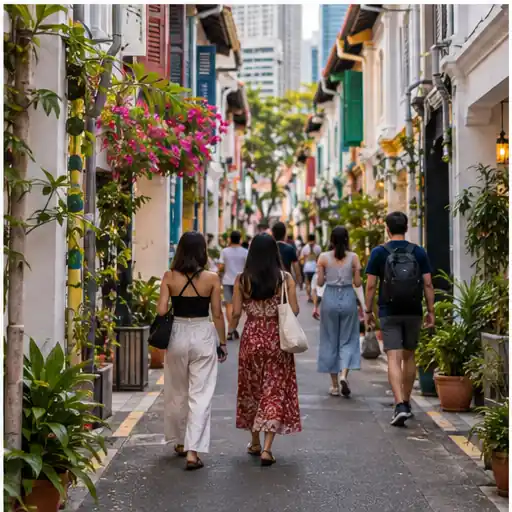
The street packs a variety of small experiences into a compact area. Its independently run retail spaces can reward browsing, and its façades offer visual interest even if you do not buy anything. Murals and painted walls have made it a popular photography stop, while cafés and nearby dining streets make it easy to pause between walks.
Haji Lane is also a useful gateway to Kampong Gelam’s wider story. The National Heritage Board describes historic links between the area and the pilgrimage trade, while the Urban Redevelopment Authority documents the conservation district and its shophouse setting. The lane’s present-day shops exist within that longer history. Seeing only a backdrop for photographs misses part of the place.

Expect a lived-in commercial street rather than a curated museum. Tenants, displays and murals can change. A specific boutique recommended in an old guide may have moved or closed. Treat discovery as the point: enter shops that catch your eye, read signs, and ask staff about their products instead of following a dated list mechanically.
Shopping along Haji Lane
Independent boutiques and personal style
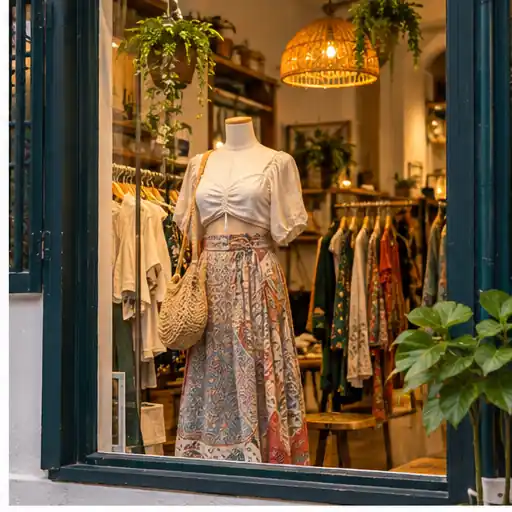
Small boutiques are central to the lane’s reputation. You may find clothing, accessories, home items or gifts, depending on the current tenants. A narrow shopfront can hide an interesting interior, but not every store is open at the same hour. If you have a particular retailer in mind, confirm its current address and schedule directly before the trip.
Browsing works best when you leave room for comparison. Look at materials, sizing, return policies and how an item will be used after your holiday. Independent pieces can be appealing precisely because they differ from mass-market souvenirs, but price alone does not establish quality. Ask before photographing inside a shop, especially where merchandise or customers are visible.
If you are choosing a gift, think about portability and the recipient’s tastes. Small accessories or practical objects can be easier to carry than fragile décor. Bring a reusable bag, and keep purchases secure in a crowded lane. Some shops may accept different payment methods, so check the sign at the counter instead of assuming.
How to shop without a rigid itinerary
Walk the length of the lane once before buying, then return to the stores that stood out. This simple circuit gives you a sense of the current mix and prevents the first eye-catching window from dictating the entire visit. If you are with friends, agree on a meeting point; people naturally move at different speeds in small shops.
Look up opening times only for a must-visit business. The street remains accessible even when individual shops are closed, but a shopping-focused visit is more satisfying when stores are operating. A very early photo walk and a boutique shopping afternoon are different outings. You can combine them, but allow a break in between rather than waiting on the pavement for every shutter to rise.
Street art and photography
Painted façades and murals help define Haji Lane’s visual identity. They also change over time, so treat a particular online photograph as inspiration rather than a promise that an exact wall will still exist. Walk slowly, look up at the upper-storey details and use the narrow perspective of the lane in your frame.
Early daylight can make photography easier when there are fewer people, though shops may still be closed. Later, open storefronts add energy and colour. Strong midday sun can create hard contrast between bright façades and shaded sections. If you use a phone, tap the main subject to set exposure and take a step back rather than blocking a doorway for the perfect angle.
Keep pedestrian flow in mind. Avoid planting a tripod in the middle of a narrow street, leaning on someone’s display or photographing people closely without consent. A café table is not public photography equipment. Buy something if you intend to sit, and follow any posted rules on photography in private spaces.
For a more distinctive set of photographs, include shophouse windows, doors, plants, textured walls and the way the lane meets adjoining streets. A close view of craftsmanship can say more about the place than a wide shot filled with strangers. Look for changing light and small details rather than reproducing the same pose at every mural.
Food and drink around the lane
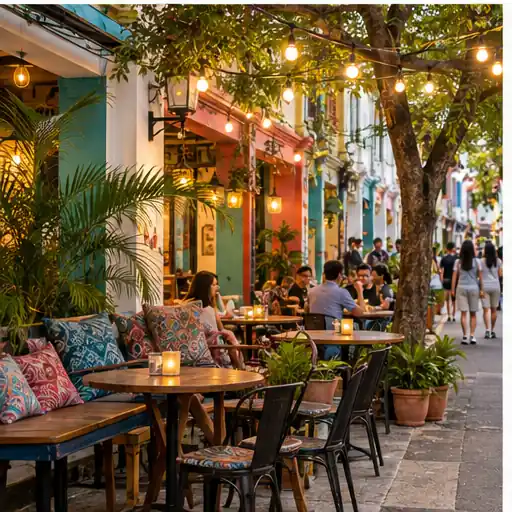
Haji Lane and its neighbouring streets offer places to stop for coffee, dessert or a meal. The mix of operators changes, and menus and prices should be checked at the venue. If a particular dietary requirement matters, confirm ingredients and preparation directly with the business. Do not assume that every establishment in the district follows the same food rules because of its location.
A good way to plan is to choose the purpose of your stop. For a short break, look for a café with available seating. For a full meal, broaden your search to the surrounding streets and compare current menus. If you want to explore the area’s food heritage, spend time learning what each place serves rather than treating every nearby dish as interchangeable.
Busy periods may mean a wait for a table. A takeaway drink can suit a walking visit, but dispose of cups properly and avoid bringing food into shops that do not allow it. In hot weather, take hydration seriously. A comfortable pause can make the second half of the walk much more enjoyable.
Explore beyond Haji Lane
Arab Street and the textile district
Arab Street is a natural next stop for visitors interested in textiles, fabrics and the wider streetscape. It has its own businesses and character. Compare shop displays, colours and building details as you move between streets. If you intend to buy fabric, ask about measurements, care and any cutting policy before paying.
A short detour changes the balance of the outing. Haji Lane is compact and often photo-focused; the surrounding blocks reveal a broader working district. Do not rush through a shop simply because you want to tick off another street name. Choose a few places that match your interests and give them proper attention.
Bussorah Street and Sultan Mosque
Bussorah Street leads toward Sultan Mosque, one of Kampong Gelam’s defining landmarks. The mosque remains a place of worship. If you wish to visit, check current visitor access, dress guidance and prayer-related restrictions with the mosque itself. A view from a public street is always an option when entry is unavailable or your schedule is short.
Respectful behaviour makes the surrounding area better for everyone. Keep voices moderate near worship spaces, avoid obstructing entrances and ask before photographing people. The mosque’s dome can help orient a walk, but its role is much more than that of a scenic backdrop.
Heritage interpretation
For historical context, look for National Heritage Board material on the Kampong Gelam trail. It explains changes to the district and the communities and trades associated with it. A self-guided heritage walk can turn a casual browse into a more informed outing without requiring a booked tour.
Notice what conservation preserves and what continues to change. The outer form of a shophouse can retain historic features while its interior accommodates a new business. This mix is part of the district’s present life. Avoid assuming every colourful building belongs to the same period or tells the same story.
When is the best time to visit Haji Lane?
Choose a time based on the experience you want. Early morning tends to suit street photography and a quieter walk, but many shops will not yet be trading. Midday or afternoon generally gives you more chances to browse and eat, though the heat and crowds can rise. Evening suits a social outing, subject to the current operating hours of individual venues.
Weekends can be lively. That energy is part of the draw for some visitors and an inconvenience for others trying to take an unobstructed photograph. A weekday visit may feel more relaxed, but do not assume every business is open every day. Check specific places only if they are essential to your plan.
Singapore’s rain can change a walking itinerary quickly. The narrow street has awnings and indoor businesses, but they are not a guarantee of continuous shelter. Bring a compact umbrella and shoes that cope with wet pavement. In a thunderstorm, seek appropriate indoor shelter rather than lingering outside for photographs.
How long should you spend there?
A simple walk along Haji Lane can be brief because the lane is short. Browsing shops, pausing for food and exploring nearby streets can easily turn it into a half-day outing. Set the time by what you actually enjoy. Someone interested mainly in murals may be satisfied sooner than a visitor searching for clothing or learning about Kampong Gelam’s history.
Do not confuse a longer visit with a better one. A focused route with time to look and rest is more satisfying than an exhausting attempt to photograph every corner. If you are planning several Singapore attractions in one day, leave space for travel, meals and the weather. The district rewards wandering but does not require a marathon.
| Visit style | What to prioritise | Planning note |
|---|---|---|
| Quick walk | The lane, shophouse details and one nearby street | Works best without a fixed shop list. |
| Shopping visit | Independent boutiques and a café break | Check a must-visit store’s hours. |
| Heritage outing | Haji Lane, Arab Street, Bussorah Street and trail material | Allow time to read and observe. |
| Photo visit | Murals, architecture and changing light | Keep doorways and walkways clear. |
A practical walking route
Start from Bugis station and navigate toward Kampong Gelam using pedestrian crossings. Walk into Haji Lane and take one unhurried pass from end to end. Do not feel compelled to photograph everything on the first pass. Notice which shops are open, where the light falls and which side streets catch your attention.
Return to a boutique or café that interests you. Then continue toward Arab Street and Bussorah Street. If visitor access is available and appropriate, learn about Sultan Mosque; otherwise appreciate its setting from the public realm. Use the district’s heritage information to understand the streets rather than treating them as a sequence of photo props.
Finish by choosing a return route based on your next destination. Bugis remains useful for many rail journeys, but another bus stop or station might suit the rest of your day. Check live directions before walking back by habit. If you have shopping bags or are tired, a shorter route home may be worth more than one extra photo stop.
Visiting with children or people with access needs
A compact street can be appealing for families, but crowding and uneven transitions at entrances make a stroller visit slower than a map suggests. Keep children close near junctions and be considerate in small boutiques. Build in a snack and toilet stop rather than expecting every shop to have public facilities.
Visitors using mobility aids should verify the accessible route from the MRT and plan around the particular shops they hope to enter. Heritage shophouses can have different doorway arrangements, and accessibility varies by business. Contact a venue directly for a specific requirement. A street-level walk through the district can still be enjoyable even if some interiors are unsuitable.
For anyone sensitive to heat, avoid making the busiest part of the day a continuous outdoor walk. Take indoor breaks where welcome, carry water and use sun protection. A shorter outing with a clear return route is easier to adapt when energy or weather changes.
Etiquette in a busy heritage street
Haji Lane is a shared space for visitors, staff, residents, deliveries and people using nearby places of worship. Leave entrances and paths open. Do not touch murals, merchandise or private property for a photograph. Ask permission before photographing shop interiors or making someone the centre of a portrait.
Keep sound at a level that suits the setting, especially near residential or worship spaces. Dispose of litter in bins and treat public seating and shop furniture as intended. If you pause for a group picture, step aside when others need to pass. The lane’s small scale is part of its charm and also the reason considerate behaviour matters.
Support businesses in a way that fits your budget. Buying from a shop you like is one option; leaving space for customers and respecting staff time is another. Avoid assuming that a mural or colourful shopfront gives permission to use a private space as a photo studio.
Common mistakes to avoid
Arriving too early for shopping is a frequent mismatch between expectations and reality. The street may be accessible, but individual businesses set their own hours. Decide whether your priority is quiet photography or open boutiques. If it is both, plan for a longer visit or return at another time.
Another mistake is treating a particular old restaurant list as current. Businesses and menus change. Confirm any must-visit venue directly, and remain open to what is actually operating when you arrive. A flexible plan also helps when rain makes a mural stop impractical.
Finally, do not limit Kampong Gelam to a single lane. Haji Lane is an excellent starting point, but the neighbouring streets and heritage material add depth. You can keep the outing short while still walking one extra block and noticing how the district changes.
Frequently asked questions about Haji Lane
Is Haji Lane free to visit?
Walking along the public street does not require an admission ticket. Shopping, food and any optional activity cost whatever the individual business charges.
Which MRT station should I use?
Bugis is a convenient rail starting point for many visitors and is served by the East-West and Downtown lines. Check the current walking route from the exit that suits your destination.
What is Haji Lane famous for?
It is known for its narrow conserved shophouse setting, independent boutiques, colourful walls and cafés within Kampong Gelam. The mix of businesses and artworks changes over time.
Are the shops open in the morning?
Hours vary by business. The street can be pleasant for an early walk even if many storefronts are closed. Check a particular shop directly if it matters to your trip.
Is Haji Lane suitable for children?
Families can enjoy a short walk, but keep children close at junctions and in crowded sections. Plan for heat, rain, snacks and the fact that small shops may not be stroller-friendly.
Can I take photos of the murals?
Street-level photographs from public areas are common, but do not obstruct the lane or enter private areas. Ask before photographing people or inside a shop, and obey any posted rules.
How much time do I need?
A quick walk can be short. Allow more time if you intend to browse, eat and explore Arab Street, Bussorah Street or heritage stops nearby.
Is Sultan Mosque on Haji Lane?
No. It is a nearby landmark in Kampong Gelam. Check current visitor arrangements with the mosque if you hope to enter, and respect its role as an active place of worship.
What should I do if it rains?
Use a compact umbrella and seek proper shelter during heavy rain or lightning. Individual shops and cafés may offer a break when open, but do not assume there is continuous covered access.
Make your Haji Lane visit count
Haji Lane is most enjoyable when you match the hour to your purpose: morning for a quieter look at the street, later for open shops and food, and an evening visit for a different atmosphere. Arrive via Bugis or another route that suits your journey, explore the lane on foot and give the surrounding Kampong Gelam streets some time too.
Look past the colourful photographs to the businesses, architecture and cultural setting. Check current hours for any essential stop, respect the people who use the district every day and leave room for a discovery that was not on your list.
Sources
- URA: Kampong Glam Conservation Area
- URA: 10 Haji Lane conservation record
- Roots: Kampong Glam Heritage Trail
- Visit Singapore: Kampong Gelam
- Visit Kampong Gelam: Haji Lane