

 By admin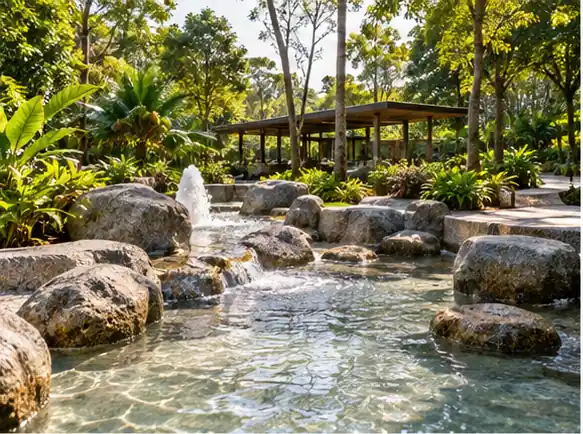
Sembawang Hot Spring Park is Singapore’s only hot spring park, a small public space along Gambas Avenue in the north. Visitors come to soak their feet in cascading pools, collect spring water in their own pails, learn about the site’s geology and history, or cook eggs at the designated station. The park is a neighbourhood attraction rather than a commercial spa, so a good visit depends on understanding the facilities and their etiquette.
NParks lists the park as open daily from 7am to 7pm. The cascading foot bath pool closes every Monday and Thursday from 11am to 2pm for maintenance and cleaning. The spring water collection point and egg-cooking area are separate facilities, so a maintenance closure of the foot bath does not automatically mean every feature is unavailable.
What makes Sembawang Hot Spring Park special?
The park is built around a natural hot spring that has shaped the area’s local identity for generations. The present landscape combines a rustic, kampung-inspired design with accessible paths, educational displays, a cascading foot bath and water collection facilities. It offers visitors a way to encounter a geothermal feature within an ordinary urban neighbourhood.
The park is compact, at around 1.1 hectares according to NParks, and does not require an elaborate itinerary. The main activity is a foot soak rather than full-body bathing. The water emerges hot and cools as it flows through four tiered pools, so visitors should choose a comfortable level and avoid assuming every basin has the same temperature.
The official NParks visitor page is the best place to confirm current hours, facilities, maintenance periods and rules. The park’s design also includes an educational zone where families can learn about hot springs and geology.
Opening hours and maintenance schedule
Sembawang Hot Spring Park is open from 7am to 7pm daily, according to NParks. The cascading foot bath pool closes on Mondays and Thursdays from 11am to 2pm for cleaning and maintenance. If the foot soak is your main reason for visiting, plan outside that window and check for temporary advisories before travelling.
NParks notes that the park can experience high visitor numbers on weekday evenings from 4pm to 7pm, as well as throughout weekends and public holidays. A visit earlier in the day may feel less crowded, but the foot bath is a shared public facility and waits can still occur.
Arrive with enough time to find a seat, prepare your pail if you brought one and leave before closing. If you are visiting near the maintenance period, check whether the facility has reopened before you make the journey. Cleaning schedules and operating notices may change.
How to get to Sembawang Hot Spring Park
By MRT
Canberra MRT station is the nearest station listed by NParks. The park is not right beside the train exit, so plan the last part of the trip using current transit directions. Depending on your starting point, a bus or taxi connection may be more convenient than walking the entire distance.
Use OneMap Singapore or a route planner for your travel date and check the entrance location along Gambas Avenue. Avoid relying on an old social-media post for a bus stop or exit number. Stops and walking routes can change, and the safest final approach is the one shown on current official maps.
By bus
Bus services connect the surrounding Sembawang and Yishun areas with Gambas Avenue, but the best route depends on where you are travelling from. Check live public-transport information before leaving and confirm the walking segment from the stop to the park entrance.
Bus travel can be useful when you want to avoid a longer walk from the MRT. If visiting with young children or older relatives, allow time for the bus stop approach and consider the heat, rain and road crossings along the route.
By car or taxi
There is no car park within Sembawang Hot Spring Park. NParks directs drivers to the nearest car park at 114 Yishun Ring Road, then an estimated 450-metre walk of about eight minutes. Parking availability and charges can change, so check current details and use legal parking only.
A taxi or ride-hailing car can drop you near the public entrance, subject to road conditions and legal stopping points. Do not expect the vehicle to enter the park or wait in a way that blocks traffic. If someone in your group has mobility needs, review the accessible route information before the trip.
The cascading foot bath pools
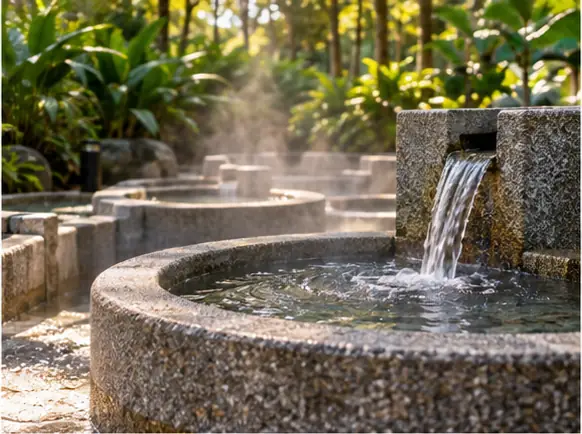
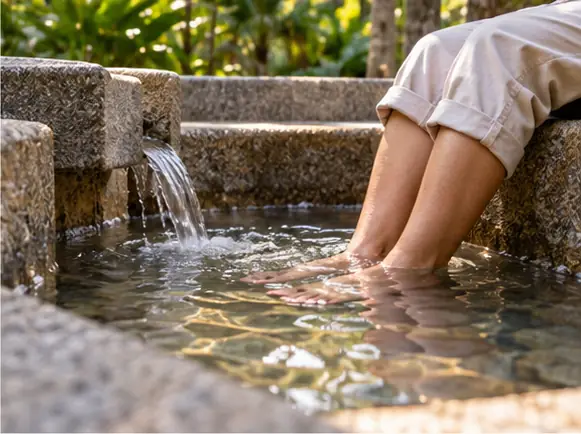
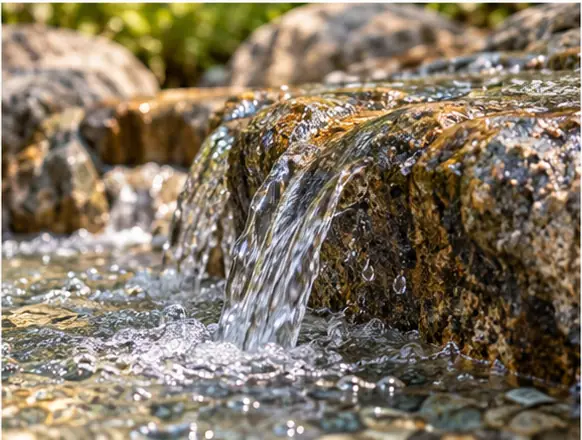
The cascading foot bath is the park’s central feature for visitors who want to experience the spring water. Hot water enters the top pool and flows through four tiers, cooling as it moves downward. This arrangement lets visitors choose a pool that feels comfortable rather than placing their feet in the hottest water immediately.
Test the water carefully before soaking. Do not place your hands, feet or other body parts into water that feels too hot, and keep children under close supervision. The temperature changes between pools and may also vary over time, so another visitor’s comfort level is not a safe guide for you.
The pool is meant for a foot bath. Do not bathe your entire body, wash hair, clean belongings or use soap in the communal water. Follow posted instructions and respect other visitors who are sharing the facility.
How to enjoy a foot soak responsibly
- Check the opening and maintenance schedule before travelling.
- Look at the posted signs when you arrive and follow any staff instructions.
- Test the water cautiously in a lower-temperature section before placing both feet in.
- Keep the soak to your feet and do not use soap or personal-care products.
- Share seating and pool space considerately, especially when the park is busy.
- Leave the area clean and place unwanted water in the designated drain, not back into a pool or planted area.
Visitors with reduced sensation, open wounds, certain health conditions or a history of heat sensitivity should be especially cautious around hot water. If you are unsure whether a foot soak is suitable for you, skip it or seek appropriate medical advice before the visit.
Collecting hot spring water
NParks identifies a water collection point where visitors can collect spring water at about 70°C in their own buckets or pails. The water is hot enough to cause burns. Carrying a full container requires care, and hot water should never be passed over children or crowded walkways.
Bring a stable, heat-resistant pail with a handle if you intend to collect water. Keep the container low and secure, avoid overfilling it, and let it cool before handling it for any other purpose. Do not use thin plastic bags, drinking bottles or containers that may soften, leak or tip when exposed to hot water.
The water collection area has a different purpose from the cascading foot bath. Use the right facility for the activity and follow the signs. Do not pour collected water into the foot bath or onto plants, and do not block the taps while filling multiple containers.
Cooking eggs at the egg station
The park has a designated egg-cooking station that uses the hot spring water. Visitors need to bring their own eggs and containers. The station offers a simple activity for families, but it is still a hot-water environment and should be treated with care.
Use only the designated cooking facility, not the communal foot bath or water collection point. Follow instructions on any posted signs about cooking times and safe handling. Bring a container suitable for hot water and a way to remove eggs without reaching into a hot basin.
Do not leave food scraps, shells or packaging behind. The park is a public space and wildlife should not be fed. If the egg station is busy, wait your turn and keep children at a safe distance from hot water.
Park amenities and accessibility
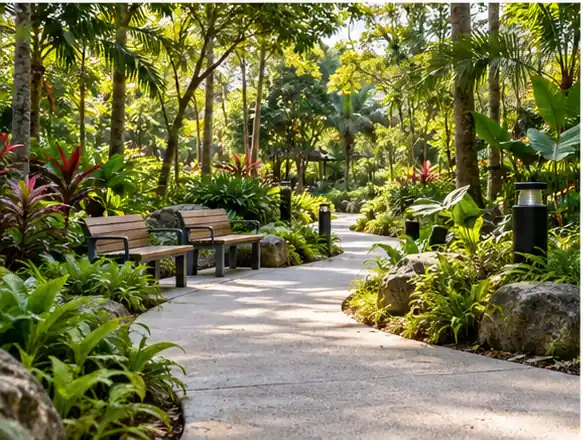
The park includes a cascading foot bath, water collection point, egg-cooking station, educational zone, footpaths, seating and other visitor amenities. NParks describes it as wheelchair accessible. Check the official park map to understand the barrier-free route and where each facility sits.
Wheelchair access does not guarantee that every activity is equally convenient for every visitor. Pool edges, seating height, crowds and carrying hot water may create practical challenges. If you require assistance, visit with a companion and contact NParks in advance about specific access questions.
The park is a compact outdoor site with limited room at its most popular features. During busy periods, be prepared to wait or choose a quieter time. Keep pathways clear for wheelchairs, strollers and visitors moving between the spring facilities.
Think about the entire journey when assessing accessibility: getting from the MRT or car park, crossing the road, entering the park and reaching the pool edge are separate parts of the outing. The official map helps show the internal route, but transit operators can provide current station and bus accessibility information. If a particular surface or transfer is essential to your visit, confirm it before travelling.
At peak periods, a wheelchair or stroller may need more room near the foot bath and water collection station. Move slowly, let people pass and ask staff if you need help finding the barrier-free route. If the pools are crowded, the educational zone and garden areas provide other ways to spend time in the park.
History of the hot spring
The Sembawang spring has a long relationship with the neighbourhood. The natural water source attracted local interest and was later associated with commercial bottling. Community support helped preserve it as a public feature, and the area was eventually redeveloped into a park that opened in 2020.
The redevelopment introduced accessible paths, a cascading pool, a water collection point and educational displays. It also created a more structured public setting for a spring that had previously been visited in a less formal way. The design balances recreation, learning and the practical need to manage a busy public space.
For a heritage perspective, the National Heritage Board’s Roots listing on the Sembawang Hot Spring Park describes the site’s local significance. Historical uses and park facilities can change, so distinguish older accounts from current visitor rules. The NParks park map shows present-day facilities and access paths.
Understanding hot spring water
A hot spring is groundwater that reaches the surface at a higher temperature than the surrounding environment. Heat from underground warms water as it moves through rock, then the water rises through natural pathways. The precise geology and chemistry of a spring depend on local conditions.
Visitors do not need to treat the water as a medicinal product. The park is a public recreation and education site, and claims about cures or health benefits should not be assumed from the presence of naturally warm water. Enjoy the experience as a warm foot soak, and take ordinary precautions around heat.
Water temperature is not uniform from the collection point to the lower pools. The cascading design cools the flow, but the hottest water can still burn. Follow signs, avoid testing temperature with a sensitive part of the body and never let a child play unsupervised near a tap or pool.
Hot spring water can also leave mineral deposits on containers and surfaces. Use only the facilities provided and do not scrape or remove deposits from the park. If you have sensitive skin, stop if the soak becomes uncomfortable and rinse your feet with clean water when appropriate.
What to bring
- A small towel and a change of socks if you plan to soak your feet.
- Your own stable pail if you want to collect water or use a personal foot soak setup where allowed.
- Eggs and a suitable container if you plan to use the designated egg-cooking station.
- Comfortable walking shoes and sun protection for the route to and around the park.
- Drinking water, especially if you are visiting during a hot part of the day.
- A reusable bag for rubbish and personal belongings.
- Any medication or personal care items you may need outdoors.
Do not bring fragile or heat-sensitive containers for collecting spring water. Keep hot water away from children and do not carry it in an open vessel through a crowded area. If you do not have a safe container, enjoy the foot bath and skip water collection.
Best time to visit
Weekday mornings can be a calmer time to see the facilities, while NParks notes that visitor numbers are often high on weekday evenings from 4pm to 7pm and throughout weekends and public holidays. Crowds vary, so consider arriving early if you want a better chance of finding space at the pools.
Check the day of the week against the foot bath maintenance schedule. On Mondays and Thursdays, the cascading pool is closed from 11am to 2pm. If you arrive during that period, you may still be able to use other facilities, but do not assume the soak is available.
Singapore’s hot and humid weather can make the outdoor walk uncomfortable. Bring water, choose light clothing and avoid rushing. If rain is heavy or lightning is present, follow park instructions and wait in a safe place or reschedule.
Visiting with children
The educational displays and gentle water features can make the park interesting for children. The hot water collection station and egg-cooking point are also memorable, but they require close adult supervision. Keep children away from taps and containers of hot water, even if the water looks calm.
Set expectations before arrival: the park is not a swimming pool and the main foot bath is for feet only. Explain that visitors need to share the pools and keep the water clean. Bring a towel, spare clothes and snacks, and plan breaks away from the hottest facilities.
For young children, consider visiting at a quieter time and spending only as long as they remain comfortable. Watch for slippery surfaces around water and keep them within reach. A short visit can be more enjoyable than trying to use every feature.
Photography and etiquette
The rustic design, old spring features, cascading pools and surrounding greenery offer several photo opportunities. Be considerate when taking pictures around other visitors. Do not photograph people in a way that invades their privacy, and avoid blocking the pool edge or an accessible path while framing a shot.
Keep equipment simple. Tripods and large setups can make a compact public area harder to navigate. Do not climb structures, move signs or lean over the water collection point for a dramatic angle. Safety and shared access come before getting a particular image.
Common mistakes to avoid
- Arriving during pool maintenance: The cascading foot bath closes Mondays and Thursdays from 11am to 2pm.
- Assuming the whole park is a spa: The main public soak is a foot bath, not a full-body bathing facility.
- Touching the hottest water carelessly: The collection point water is around 70°C and can burn.
- Expecting on-site parking: There is no car park within the park; the nearest listed car park is at 114 Yishun Ring Road.
- Bringing an unsafe container: Use a stable, heat-resistant pail for hot water.
- Ignoring busy periods: Weekday evenings, weekends and holidays can be crowded.
- Believing health claims without evidence: Treat the water as a recreational feature, not a medical treatment.
Nearby places to add to your day
Sembawang Park offers a separate coastal setting with open spaces and views near the water. It is not the same site as Sembawang Hot Spring Park, so allow for the distance between the two. Check its current access, weather and any notices before making it a second stop.
Other northern destinations can be combined with the visit if you have enough time, but avoid overloading the schedule. A relaxed hot-spring visit, a meal in the neighbourhood and one nearby park may be more practical than crossing Singapore between attractions.
For additional local destination ideas, browse the Singapore section of Lion City Herald and the Lion City Herald homepage. Use official NParks information for the hot spring’s facilities and schedule.
Frequently asked questions
What are Sembawang Hot Spring Park’s opening hours?
NParks lists the park as open daily from 7am to 7pm. Check current notices before travelling.
When is the cascading foot bath closed?
It is closed every Monday and Thursday from 11am to 2pm for maintenance and cleaning.
Can I bathe or swim in the pools?
No. The cascading pool is for soaking feet. Do not bathe your body, wash hair or use soap in the shared water.
How hot is the water collection point?
NParks says visitors can collect spring water at about 70°C. Use a suitable pail and handle the water carefully to avoid burns.
Can I cook eggs at the park?
Yes, at the designated egg-cooking station. Bring your own eggs and a heat-safe container and follow posted instructions.
Is there parking at the park?
There is no car park on site. NParks lists the nearest car park at 114 Yishun Ring Road, about 450 metres or eight minutes away on foot.
Which MRT station is closest?
NParks lists Canberra MRT station as nearby. Check a current route planner for the last-mile bus or walking connection.
Can I bring my own bucket?
Yes. NParks advises visitors to bring their own buckets or pails. Choose a stable, heat-resistant container for hot water.
Is the park wheelchair accessible?
NParks lists the park as wheelchair accessible. Review its map and contact the agency if you need details about a specific facility or route.
Is the water therapeutic?
The park offers a natural hot spring experience, but visitors should not treat it as a medical therapy or assume it cures health conditions.
Plan a comfortable visit
Sembawang Hot Spring Park is a distinctive public place where a natural spring, neighbourhood history and simple outdoor recreation meet. Check the foot bath maintenance window, plan your transport and bring the right supplies if you want to collect water or cook eggs.
Use the facilities for their intended purpose, test the water cautiously and give other visitors room. A short, considerate visit is often enough to enjoy this unusual part of Singapore’s northern landscape.
Sources
- NParks: Sembawang Hot Spring Park visitor information
- NParks: Sembawang Hot Spring Park map (PDF)
- NParks: Reopening of Sembawang Hot Spring Park
- NParks: Sembawang hot spring directions map
- NParks: Find a park or park connector