

 By admin

BTO income ceiling rules in Singapore changed on 24 August 2026. For eligible families applying for an HDB Flat Eligibility (HFE) letter from that date, the monthly household income ceiling for a new subsidised HDB flat has increased from $14,000 to $16,000. Eligible singles aged 35 and above have a revised ceiling of $8,000, up from $7,000, for the relevant subsidised-flat routes. These limits affect who may apply for particular homes, grants or HDB loans; they do not guarantee a flat, a grant amount, loan approval or a successful ballot.
The date of the HFE application matters. Households that applied before 24 August 2026 may still be assessed under the previous ceiling, depending on their letter status and circumstances. Flat type, project, applicant scheme and whether a household is buying as an extended family can also change the applicable figure. This guide explains the current 2026 update, how to read the income limit, what HDB assesses, and which steps to take before a BTO application. Always check the latest HDB Flat Portal and sales launch details for your own household.
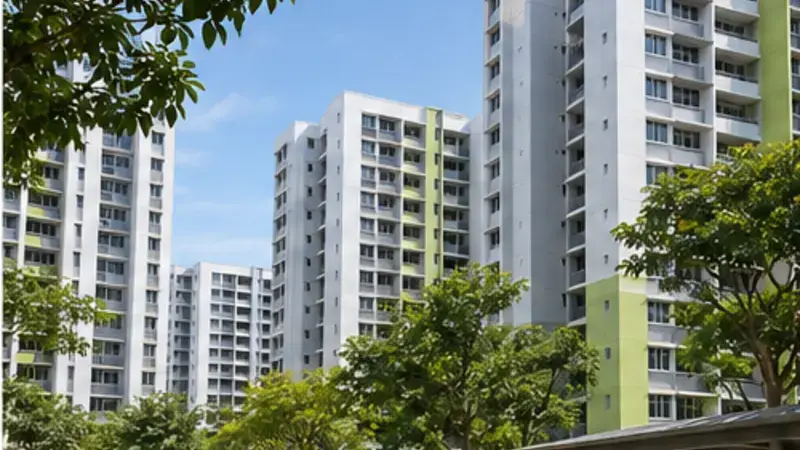
BTO income ceiling: the 2026 update in brief
HDB announced that the monthly income ceiling for eligible families purchasing a new subsidised flat from HDB will rise to $16,000. The same revised family ceiling applies to eligible households buying a resale HDB flat with the CPF Housing Grant or seeking an HDB housing loan for a new or resale flat, subject to the applicable rules. Eligible singles aged 35 and above have a revised $8,000 ceiling for the specified subsidised-flat and HDB-loan routes. The revised ceilings apply to HFE letter applications made from 24 August 2026.
This is a change from the earlier general figures of $14,000 for families and $7,000 for singles. The update reflects a policy decision; it does not mean all flat types or buyer profiles share one threshold. HDB’s eligibility pages identify different income limits for different flat types and schemes, and a BTO sales launch may state a project-specific limit. Read the page for the household type and flat you want rather than relying on a single number copied from an old article.
| Buyer route | Earlier figure | Revised figure from 24 Aug 2026 | Important condition |
|---|---|---|---|
| Eligible family applying for a new subsidised HDB flat | $14,000 per month | $16,000 per month | HFE application date and flat scheme matter |
| Eligible single aged 35+ applying for a subsidised flat | $7,000 per month | $8,000 per month | Check the flat type and single-person scheme |
| Eligible family seeking an HDB housing loan | $14,000 per month | $16,000 per month | Loan amount and approval use separate assessments |
| Eligible extended family in the relevant arrangement | Previously up to $21,000 | Check the revised family-nucleus rules | Each group has its own sub-limit |
| New EC unit from a developer | $16,000 per month | $18,000 per month | Separate from a BTO; tender-date conditions apply |
The table is a quick guide, not a complete eligibility decision. HDB assesses the household using its HFE process and the relevant application details. In particular, an Executive Condominium sold by a developer has different rules from a BTO flat sold by HDB. Do not use the EC figure to judge whether you qualify for a BTO.
What an income ceiling does and does not decide
An income ceiling is a maximum household income used in a particular housing scheme. If the applicable ceiling is $16,000, a household whose assessed income is above that limit may not qualify for that route. A household below it still has to meet citizenship, age, family nucleus, property ownership, previous housing subsidy and other eligibility conditions. A figure under the ceiling is not a promise that HDB will approve the flat application or provide a particular financing amount.
The ceiling is also not the price limit for a flat. It does not mean the home costs $16,000, and it is not the monthly mortgage cap. It determines eligibility for a route, while affordability depends on the flat price, CPF savings, grants if eligible, loan type, interest rate, cash needs, other debts and household budget. Applicants should treat eligibility and affordability as related but separate questions.
Some income ceilings apply to CPF housing grants or an HDB loan even when the buyer is purchasing a resale flat. Others apply to a subsidised new flat. The HDB page explains which condition belongs to which path. If the household is deciding between a BTO, resale HDB flat, HDB loan, bank loan or EC, compare each route under its own criteria before paying an option fee or making a binding commitment.
Why HDB uses the HFE letter
The HFE letter brings together key eligibility and financing information before a flat application. It can tell a household whether it is eligible to buy a new or resale flat, whether it may qualify for CPF housing grants, and whether it can apply for an HDB housing loan. It is a practical starting point because a family can check several parts of the purchase process before choosing a project or submitting an application.
An HFE letter is not the same thing as a BTO ballot result, flat booking or final loan disbursement. It provides an assessment based on the information and rules applicable to the application. If income, family composition or property ownership changes, the buyer should check what needs to be updated. Applicants should also note any validity period shown on the letter and avoid assuming that an earlier assessment remains usable indefinitely.
For the August 2026 ceiling change, HDB says the HFE application date is central to the revised income ceilings. A household near the old threshold should check its current HFE status before deciding whether to cancel and reapply. Cancelling a valid letter can affect planning and may require a fresh assessment. Read the exact guidance on HDB’s income-ceiling announcement and in the HDB Flat Portal before taking that step.

Which HFE application date applies?
The revised income limits apply to eligible people who submit an HFE letter application from 24 August 2026. In general, a household that applied on or after that date will be assessed under the revised ceiling for the covered route. A letter already issued before the change does not automatically update simply because the policy has changed. A household with a pending application or a letter stating that it exceeded the old limit should read HDB’s transition guidance and decide based on its own status.
HDB’s announcement distinguishes between new applications and existing HFE letters. Some households that were previously assessed as ineligible may need to cancel the old application or letter and submit a new one if they want assessment under the revised ceiling. The income assessment period and supporting documents may then be based on the new application. Before cancelling, verify the process and consequences with HDB, especially if the letter is valid or a BTO application has already been submitted.
A practical way to avoid confusion is to write down four dates: the date the HFE application was submitted, the date the letter was issued, the date of the upcoming sales exercise, and any date by which HDB requests documents. Save the HDB acknowledgement and the letter itself. If your income sits between $14,000 and $16,000, those dates may make a material difference to which ceiling applies.
How HDB defines household income
Do not compare the ceiling with take-home pay alone. HDB’s assessment uses gross monthly household income according to the rules for the particular application and the applicants or occupiers listed in the HFE letter. The exact income period and documents depend on the applicant’s work situation and HDB’s current process. Salaried employees, people with variable pay, self-employed applicants and households with income changes may need different evidence.
Applicants should gather the documents requested in the HDB Flat Portal, such as current income records and other supporting information. Avoid estimating eligibility from one payslip if income includes commission, overtime, allowances, bonuses or self-employment earnings. The portal can tell you what to submit and how HDB will assess the application. If income has changed recently, explain the circumstances accurately instead of selecting whichever month appears most favourable.
Household composition matters as well. The listed applicants and occupiers form the core family nucleus for the scheme. An extended-family application has specific grouping rules rather than simply adding every relative’s pay together under a single general ceiling. The application must accurately state who is applying, who is an occupier and how the household qualifies. Do not leave out an income-earning person who is required to be listed or include someone who does not meet the scheme’s role.
Extended-family and multi-generation applications
Some HDB schemes allow an extended or multi-generation family to apply together. The income assessment can use groups, each with its own limit, as well as a combined household ceiling. HDB’s published guide explains how a family is divided into Group A and Group B and gives examples. The ordinary family headline figure should not be applied to an extended-family case without checking the detailed rule.
For eligible households applying under the revised framework, HDB’s current housing-loan page lists an income ceiling of $24,000 for extended families, compared with $16,000 for families. Extended-family applications have additional grouping rules, so this is not permission to combine any relatives’ incomes. HDB’s guide explains which family members belong in each group and the limit for that group. Use the current HDB guide and your HFE assessment rather than adding incomes yourself.
Families considering a 3Gen flat should also check that they qualify for the multi-generation scheme and that the available flat type fits their intended household. The presence of parents and adult children does not automatically create an eligible extended-family application. HDB defines which relationships and applicants may form the group. Confirm citizenship, age, family relationship, income and occupancy requirements before budgeting around a 3Gen flat.
Does the ceiling vary by flat type or project?
Yes. The BTO income ceiling can vary according to flat type, buyer scheme and project. HDB’s current couples-and-families page identifies different limits for 2-room Flexi, 3-room, 4-room and 5-room flats, and says the sales launch will specify the applicable income ceiling for a project where it differs. For some 3-room projects, the threshold may be lower than the general family maximum. A single headline number should therefore be treated as a starting point rather than a guaranteed limit for every launch.
Flat classification also affects other conditions. Standard, Plus and Prime flats can have different subsidy, minimum occupation and resale rules. Those policies are separate from the income ceiling, although a household often needs to understand them together before choosing a project. A more central location or additional subsidy conditions do not automatically change the income limit; follow the sales exercise details for that specific project.
Check the project factsheet and HDB announcement when a sales exercise opens. Look for the flat types offered, their income ceilings, lease, classification, grants or subsidies, application dates and any special conditions. If a page uses an older ceiling or describes a project before the August 2026 change, verify the publication date before relying on it.

Singles applying for a BTO flat
Eligible singles aged 35 and above have a revised ceiling of $8,000 for the covered subsidised-flat and HDB housing-loan routes from 24 August 2026. That does not mean every single applicant can select any BTO flat type. Eligibility depends on the single-person scheme, age, citizenship, flat type and other conditions. Singles should check the HDB page that specifically applies to their household rather than borrowing the married-family limit.
Singles may have different options for 2-room Flexi flats, including lease and location conditions. The rules have changed over time, and classification rules can affect which new flats are available. A 2-room Flexi flat on a short lease may have a different ceiling from a 99-year lease. The HDB page and the sales exercise announcement provide the current limits and available projects.
For a single applicant, compare the purchase budget with one income rather than assuming a future partner’s income will be included. Consider emergency savings, CPF contributions, renovation, utilities and the monthly mortgage. If applying jointly with another person under an allowed scheme, confirm how that changes the household nucleus and eligibility. Do not add a co-applicant informally after the HFE letter without checking the official procedure.
Income ceiling, grants and HDB loan eligibility
The ceiling can affect several parts of a housing plan, but each benefit has its own criteria. A household may be eligible for a new flat while not qualifying for a particular grant, or may qualify for a grant but choose a financial institution’s loan. The HFE letter is designed to show eligibility information across the purchase. Use the result shown for the relevant grant or loan instead of assuming one ceiling automatically determines every amount.
CPF housing grants are means-tested and can depend on factors such as first-timer status, household income, flat type, distance to parents and work history. The amount can taper as income rises, and a buyer may be ineligible for one grant but still qualify for another. HDB’s grant pages show the current criteria. Grants reduce the upfront purchase burden but should not be treated as cash paid directly into a buyer’s bank account.
HDB loans and bank loans also differ. An HDB loan has eligibility rules, a Loan-to-Value limit and a mortgage servicing framework. A bank loan has its own assessment, interest rate and financing rules. A household near the ceiling should assess affordability under realistic interest-rate and income scenarios, not just the maximum amount it might borrow. Borrowing less than the maximum can leave more room for savings and unexpected expenses.
Why a household below the ceiling may still not qualify
Income is only one component of the eligibility test. HDB may also assess citizenship, age, family nucleus, ownership or interest in other property, previous housing subsidies, waiting periods, flat type and application history. For some routes, property ownership or disposal timing can affect eligibility even when monthly income is low. Every applicant and occupier should understand the consequences of being named in the application.
A household can also meet the income ceiling but fail an affordability check. Monthly expenses, existing debt, age, loan tenure, CPF funds and flat price affect the amount of financing available. HDB’s HFE assessment and financial planning tools can help show a more realistic position. If the flat budget works only when every assumption is optimistic, the household may want to consider a lower-priced option or additional savings before proceeding.
Finally, a BTO ballot is not based only on income. Applicant categories, priority schemes, ballot chances and supply affect selection. Meeting all eligibility conditions means the household can apply; it does not guarantee a queue number or a flat in the desired town. Keep a backup plan, such as a later sales exercise, a different project or a resale option that fits the budget.
Planning for the November 2026 BTO exercise
HDB announced a November 2026 BTO sales exercise instead of an October exercise to give potential buyers more time to review plans and apply under the revised ceilings. About 7,960 flats are expected across Bedok, Geylang, Sembawang, Tengah, Toa Payoh and Yishun, with Community Care Apartments also planned for Toa Payoh. Project details and classifications are published separately. Check HDB’s latest launch page because supply, dates and conditions can be updated.
Potential applicants should apply for the HFE letter early and submit the required documents by the deadline stated by HDB. Since the announced date for the November exercise document submission was 25 September 2026, applicants who missed it should check the current portal rather than assume they can still participate. HDB may publish updated application instructions or dates. Avoid relying on a general calendar or unofficial social-media post for a deadline.
Before launch, decide which towns and flat types are realistic. Compare estimated prices, commute, family support, schools, amenities, lease conditions and monthly costs. Consider at least two projects, but do not choose a flat solely because a headline income ceiling allows the application. A home that meets the eligibility test must also fit the household’s long-term budget and needs.
How to estimate your position before applying
Start by identifying the exact route: new subsidised BTO, resale flat with grant, HDB loan, bank loan or new EC. Then identify who will be listed as applicants and occupiers. Check the applicable income ceiling for that household and flat type, including whether an extended-family rule applies. Note the HFE application date and whether an earlier letter exists.
Next, assemble the income documents HDB asks for and enter figures accurately. Do not use gross salary for one person and take-home pay for another; use the documentation and assessment method specified by HDB. If a household has variable income, ask how the relevant period is treated. A small difference near the ceiling can matter, so it is better to verify with the portal than to guess from a monthly bank credit.
Finally, review housing conditions beyond income. Check property ownership, previous subsidies, eligibility scheme, citizenship, age and minimum occupation requirements. Read the HFE letter after it arrives. If a result appears inconsistent with your documents, use HDB’s official enquiry channels and keep a record of the response. Do not submit a second or cancelled application unless you understand the effect.
Common mistakes to avoid
- Using the old $14,000 family ceiling for an HFE application submitted after 24 August 2026 without checking the revised rules.
- Assuming the $16,000 figure applies to every flat type, scheme and project.
- Using the EC ceiling to decide BTO eligibility.
- Comparing the ceiling with take-home pay instead of following HDB’s gross-income assessment.
- Assuming a valid HFE letter updates automatically after a policy change.
- Cancelling an HFE application before confirming the transition process and consequences.
- Assuming that eligibility guarantees a grant, loan amount, ballot result or flat.
- Ignoring property ownership and previous housing subsidy conditions.
- Budgeting only for the loan instalment and forgetting renovation, fees and ongoing costs.
A careful application is often slower than a quick online estimate, but it reduces the chance of a costly surprise. Keep a copy of the HFE decision, project details, income records and any written clarification from HDB. If one household member’s circumstances change, ask whether the change must be reported before the flat application proceeds.
How couples can make a realistic home budget
After checking eligibility, list one-time and recurring costs. One-time costs can include option fees, stamp duty, legal work, renovation, appliances, moving and furnishing. Recurring costs include mortgage payments, service and conservancy charges, utilities, insurance, transport, maintenance and savings for repairs. The amount available from CPF does not remove the need to plan for cash expenses.
Use a monthly budget that leaves room for emergencies and future family needs. If the household’s income varies, base the plan on a conservative average rather than a strong month. Consider what would happen if one partner changes jobs, takes parental leave or has a temporary income interruption. This does not mean a household should avoid buying; it means the loan should remain manageable when normal life changes.
Compare loan options with official calculators and current terms. A maximum loan amount is not a recommended target. Ask what interest-rate assumptions are used and how the instalment may change at repricing or renewal. If the family is uncertain, speak to a qualified housing or financial professional and verify the details with HDB or CPF Board.
Questions to ask before using the revised ceiling
Ask whether the ceiling applies to your exact household type and flat. Confirm whether the relevant HFE application was submitted before or after 24 August 2026. Ask whether a previous HFE letter remains valid, whether an application needs to be cancelled, and which income documents are required. For an extended family, request the current group limits and calculation method instead of applying the ordinary family figure.
For a BTO launch, ask which project-specific ceiling applies, what the flat classification is and whether other conditions affect resale, minimum occupation or rental. For financing, ask how HDB assesses income and what the HFE letter says about the loan. For grants, confirm the grant-specific income and eligibility rules. Different questions may require different HDB pages or agencies, so save the source where the answer came from.
These checks make the policy update easier to use. A higher ceiling expands eligibility for some households, but each household still needs an accurate HFE assessment and a flat that fits its plans. No article can replace the personalised decision shown in an official HFE letter.

Frequently asked questions
What is the BTO income ceiling in Singapore in 2026?
For eligible families applying for an HFE letter from 24 August 2026, the general ceiling for a new subsidised flat has risen to $16,000 a month. The exact limit can vary by flat type, household scheme and BTO project, so check HDB’s current page and sales launch.
When did the HDB income ceiling increase take effect?
The revised ceilings apply to eligible HFE letter applications submitted from 24 August 2026. The date of the HFE application matters; an earlier letter does not necessarily update automatically.
What is the income ceiling for singles applying for a new HDB flat?
Eligible singles aged 35 and above have a revised $8,000 monthly ceiling for the covered subsidised-flat and HDB loan routes from 24 August 2026. Flat type and scheme conditions still apply.
Is the BTO income ceiling the same for every flat type?
No. HDB’s eligibility page shows different limits for some flat types and project categories. A BTO sales launch may specify the ceiling that applies to a particular project.
Does earning below the ceiling guarantee a BTO flat?
No. Applicants must meet other eligibility and financing conditions, and a ballot or flat selection depends on supply and application outcomes. Income eligibility only determines whether a particular route is open.
Does the $16,000 ceiling apply to ECs?
No. Executive Condominiums are a separate route. HDB says the new EC income ceiling is $18,000 for qualifying new units with land sale tender closing dates on or after 24 August 2026.
What should I do if my old HFE letter says I exceed the income limit?
Check HDB’s transition guidance and your current letter status before cancelling anything. Some households may need to submit a new HFE application to be assessed under the revised ceiling, but the process depends on the case.
How do I calculate household income for a BTO application?
Follow the income-document instructions in the HDB Flat Portal and include the correct applicants and occupiers. Do not estimate using take-home pay or omit variable income without checking the official assessment method.
Official sources
- HDB: Increase in Income Ceilings and Greater Support for Families with Children
- HDB: Couples and Families eligibility
- HDB: Singles eligibility
- HDB: Apply for an HFE letter
- HDB: Current HDB housing loan income ceilings
HDB rules, project conditions and deadlines can change. Verify your household’s eligibility in the HDB Flat Portal before applying or cancelling an HFE letter.