

 By admin
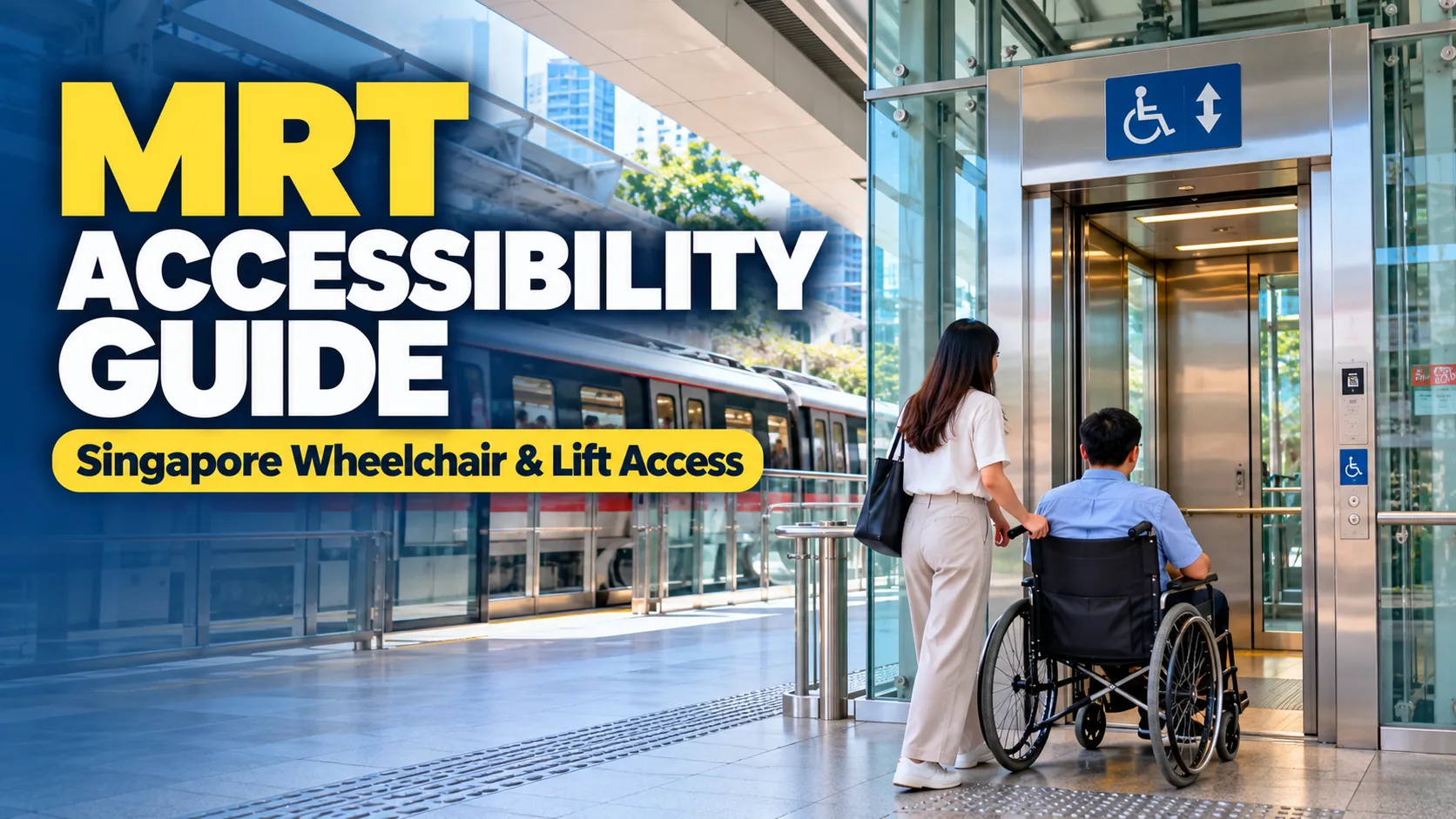
Singapore’s MRT network has accessibility features that help wheelchair users, seniors, visually impaired commuters, passengers with hearing impairments and families with strollers travel more comfortably. The MRT Accessibility Guide covers barrier-free routes, station lifts, tactile guidance, hearing assistance and practical journey-planning tips. A little preparation can make a trip easier, especially when changing trains or travelling through an unfamiliar station. And if a lift is temporarily unavailable, checking station information before leaving can save an unnecessary detour.
TL;DR: Singapore MRT Accessibility Guide at a Glance
Singapore MRT stations provide barrier-free access, with features such as lifts, accessible fare gates and tactile guidance. Wheelchair users and passengers with mobility aids should check their route before travelling, including lift availability at both the starting station and destination. Visually impaired commuters can benefit from tactile indicators and other wayfinding features, while hearing assistance and visual information support passengers with hearing difficulties. Check current station information and planned lift maintenance before setting off.
Is Singapore MRT Wheelchair Accessible?
Yes, Singapore MRT stations provide barrier-free access routes designed to help wheelchair users and passengers with mobility needs travel between station entrances and train platforms. Lifts and accessible fare gates are useful parts of this arrangement, though the route can differ from one station to another.
For wheelchair users, planning the journey involves more than checking whether the destination has a lift. You may also need to consider the interchange station, the distance between the lift and platform, and the route from the station exit to your destination.
Singapore’s Land Transport Authority (LTA) provides guidance on inclusive public transport and mobility aids. Check the latest station information before travelling, particularly if your journey depends on a specific lift. A temporary outage can affect your planned route, even when the station normally has accessible facilities.
MRT Accessibility Features in Singapore
Singapore MRT stations have features that support passengers with different mobility, visual and hearing needs. The exact facilities and arrangements can vary by station.
1. Lifts and Barrier-Free Routes
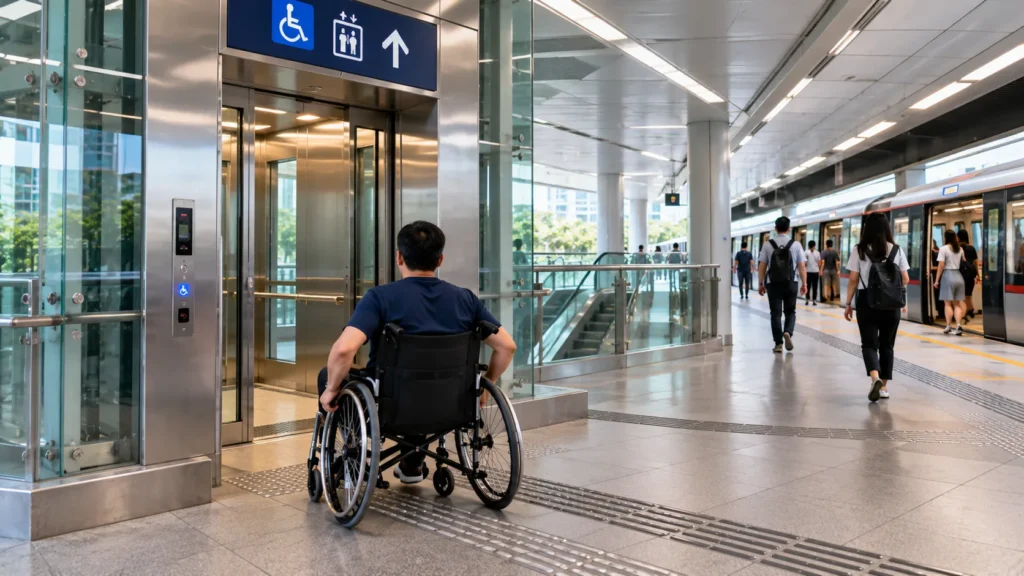
Lifts help passengers travel between different station levels without using stairs. They are particularly useful for wheelchair users, older commuters, parents with strollers and people who have difficulty climbing steps.
Barrier-free routes connect accessible parts of the station, including entrances and platforms. At interchange stations, however, you may need to follow additional signs to reach the correct line or platform.
Before leaving home, check whether the lifts at your starting station, interchange and destination are operating. If a lift is unavailable, ask station staff about an alternative accessible route.
2. Tactile Paving and Braille Signage
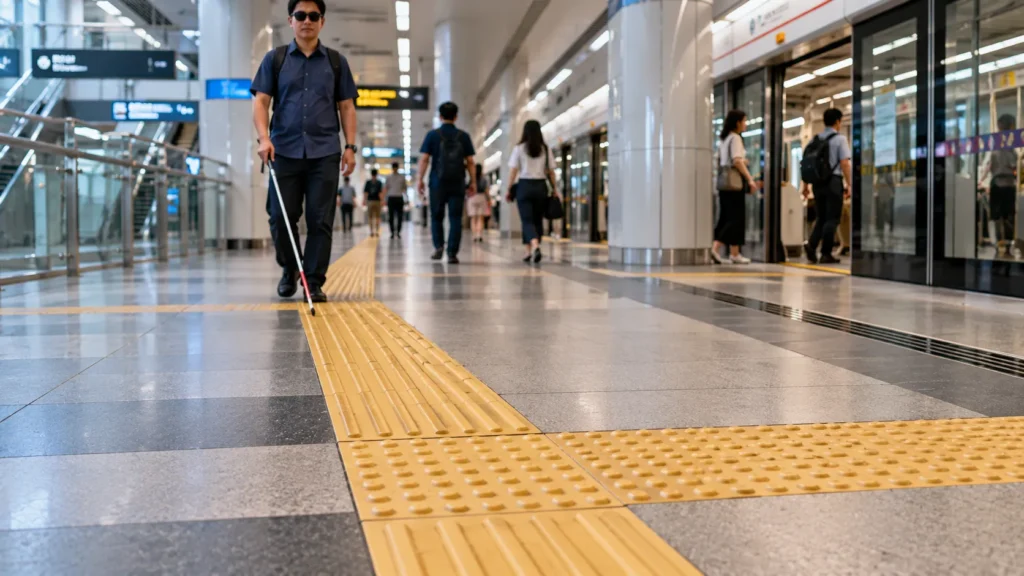
Tactile guiding systems help visually impaired commuters identify routes and locate relevant station facilities. The raised patterns underfoot provide information that can be detected with a cane or through touch underfoot.
Braille and tactile signage can also help passengers identify facilities and directions. These features work alongside other wayfinding information rather than replacing it.
If you’re unfamiliar with a station, asking staff for directions can make it easier to find the appropriate route. Avoid assuming that every tactile indicator leads directly to a lift or that all stations use identical layouts.
3. Hearing Assistance and Visual Displays
Passengers with hearing impairments can use visual information displayed on station screens and train information systems. These displays can help communicate train arrivals, destinations and service announcements.
Some public transport facilities also have Hearing Enhancement Systems (HES), which support eligible passengers with compatible hearing aids. Availability can depend on the facility and location.
If you rely on hearing assistance, check the facilities available at the station you plan to use. Visual displays are useful, but it’s still worth checking staff announcements or asking an employee if a service disruption is unclear.
4. Priority-Use Facilities and Passenger Assistance
Priority-use signs identify facilities intended to support passengers who may need extra time or assistance. Lifts and designated priority areas can be particularly helpful for wheelchair users, seniors and people with reduced mobility.
Station staff can help with directions and explain available facilities. Look for the Passenger Service Centre or approach a station employee if you need assistance finding a lift, accessible fare gate or interchange route.
How to Plan an Accessible MRT Journey
A few checks before travelling can prevent unnecessary detours, especially when your journey includes an interchange.
1. Check Your Starting and Destination Stations
Confirm the accessible route at both ends of your journey. If you need to change MRT lines, check the interchange station too.
An accessible entrance at your starting point doesn’t automatically confirm that every route through an interchange is suitable for your needs. Allow extra time if you’re travelling somewhere unfamiliar.
2. Find the Lift and Accessible Fare Gate
Follow the station’s signs to locate the lift and accessible fare gate. If the signs aren’t clear, ask station staff to point you towards the appropriate entrance or platform.
Planning this step beforehand can be helpful when travelling with a wheelchair, mobility aid or stroller. You won’t have to rely on finding an alternative route at the last minute.
3. Travel Safely Between the Platform and Train
Pay attention to the gap between the platform and train when boarding. The gap can vary, and some passengers may need extra care or assistance.
Position your wheelchair or mobility aid safely, and ask station staff for help if you’re unsure about boarding. If your intended route becomes inaccessible because of maintenance or a disruption, check with staff before continuing.
MRT Accessibility for Wheelchairs, Mobility Aids and Strollers
Wheelchairs and personal mobility aids (PMAs) serve different needs, so it’s useful to check the applicable requirements before travelling. A PMA may include a mobility scooter used by someone with limited mobility.
LTA’s published PMA limits include the following measurements. Verify the current rules before your trip, as requirements and permitted devices may be subject to change.
| PMA measurement | Published limit |
|---|---|
| Maximum weight, including the user | 300 kg |
| Maximum length | 120 cm |
| Maximum width | 70 cm |
| Maximum height | 150 cm |
These figures refer to PMA requirements, not a universal size limit for every wheelchair or stroller. Check the rules that apply to your specific device.
Parents travelling with strollers should use accessible routes where available and keep the stroller under control when boarding or leaving the train. During busy periods, allow other passengers room to move. If you need extra assistance, station staff can help you identify the appropriate route.
MRT Accessibility Guide for Visually Impaired Passengers, Hearing-Impaired Commuters and Seniors
Accessibility covers more than physical access. Visually impaired passengers may benefit from tactile guidance, Braille signage and audio announcements, while commuters with hearing impairments may rely on visual displays and hearing assistance facilities.
Older passengers and people with temporary mobility difficulties may find lifts and priority-use facilities particularly helpful. Some commuters may also need extra time to move between platforms or board a train.
Facilities differ across the network, so check the relevant station information rather than assuming every feature is available at every location. And if you need help during your journey, station staff can provide directions and explain the facilities available.
How to Check MRT Accessibility and Lift Availability
Before travelling, check official LTA and MyTransport.SG information for relevant station facilities and planned lift maintenance. This is particularly useful if you depend on a lift to enter a station or reach a platform.
Use this checklist before departure:
| What to check | Why it matters |
|---|---|
| Lift availability | Helps you plan an accessible route |
| Starting and destination stations | Confirms access at both ends |
| Interchange route | Helps you plan transfers between lines |
| PMA restrictions | Confirms whether your device meets applicable requirements |
| Service updates | Alerts you to changes that may affect your journey |
If a lift is unavailable, ask station staff about alternative access arrangements. Don’t assume another entrance will be suitable for a wheelchair or mobility aid without checking first.
Frequently Asked Questions About MRT Accessibility Guide
Do all MRT stations in Singapore have lifts?
Singapore MRT stations provide barrier-free access arrangements, but you should check the relevant station’s facilities and current lift status before travelling. A lift outage may affect your planned route.
Can wheelchair users travel on Singapore MRT trains?
Yes, Singapore MRT supports wheelchair travel through barrier-free station access and related facilities. Check the route, fare gate and applicable mobility-aid requirements before your journey.
How can I check if an MRT lift is working?
Check official LTA or MyTransport.SG information for planned lift maintenance and relevant service updates. If you’re already at the station, ask staff for the latest information.
What accessibility facilities help visually impaired commuters?
Tactile guiding systems, Braille signage and audio information can help visually impaired passengers find their way around stations. The features available may differ by location.
Can I bring a stroller on the Singapore MRT?
Strollers can be used on Singapore MRT services. Use lifts where needed, keep the stroller under control when boarding and leave room for other passengers, particularly during peak periods.
Conclusion
Singapore MRT offers accessibility features such as lifts, barrier-free routes, tactile guidance and passenger assistance. The MRT Accessibility Guide starts with a simple habit: check your route, confirm lift availability and allow extra time for transfers. A little preparation can make travelling around Singapore easier and less stressful.
[…] MRT Accessibility Guide Singapore: Wheelchair Access, Lifts and Facilities MRT Bicycle Parking in Singapore: Locations, Rules and Tips MRT Station Parking in Singapore: Locations, Rates & Tips MRT to Singapore Zoo: How to Get There MRT to VivoCity Singapore: Route, Exits & Fares MRT to Universal Studios Singapore: How to Get There MRT to Gardens by the Bay: Stations, Exits & Walking Routes MRT to Chinatown Singapore: Routes, Exits & Travel Time MRT to Orchard Road: Which Station Should You Use? MRT to Sentosa: How to Get There by Train […]