

 By admin
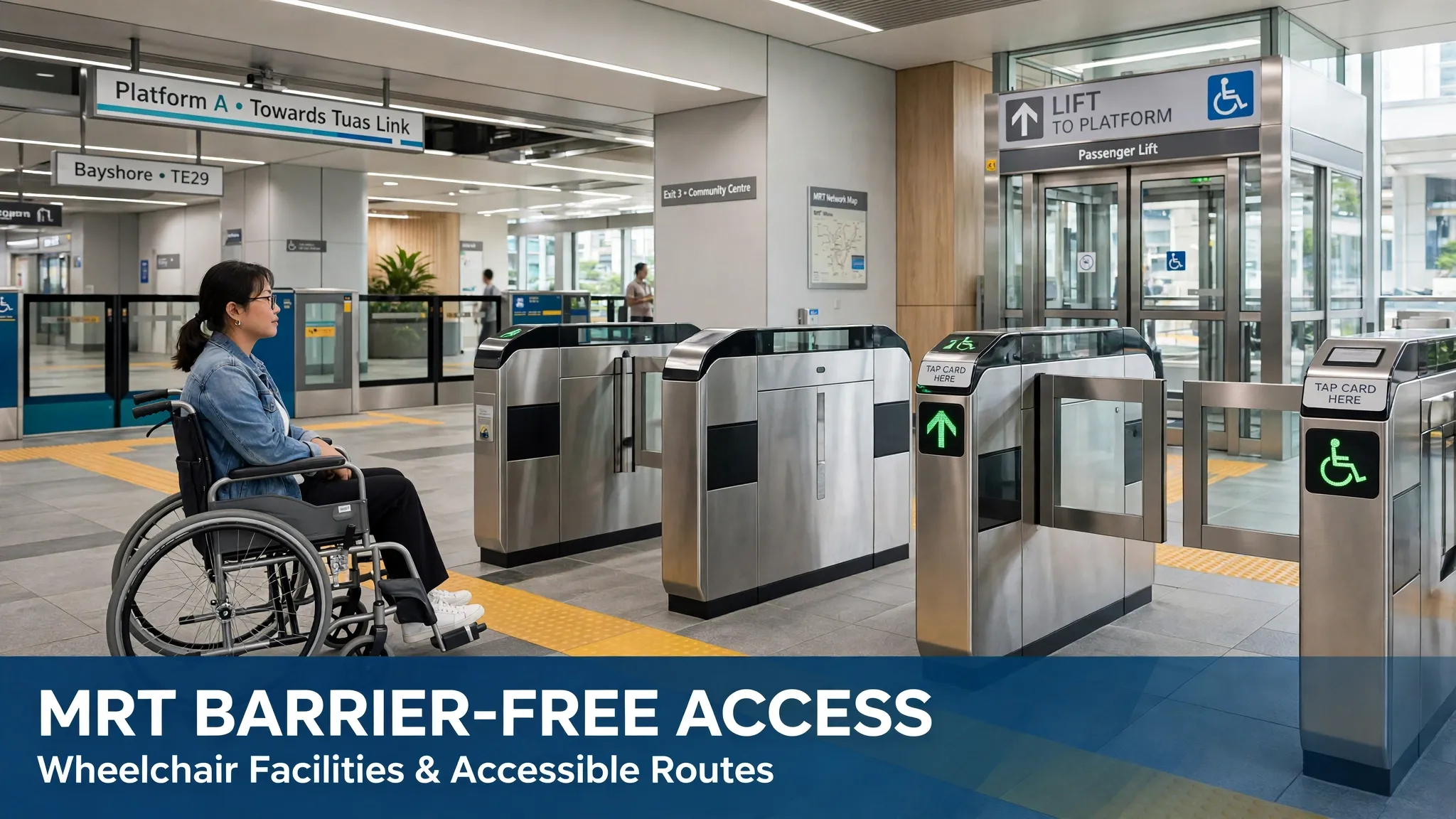
MRT Barrier Free Access in Singapore helps commuters with different mobility and accessibility needs travel by train with greater ease. All MRT and LRT stations have barrier-free access routes, with facilities such as passenger lifts, wider automatic fare gates and accessible station pathways. These features support wheelchair users, seniors, parents with strollers and persons with disabilities. Tactile guiding systems also help visually impaired commuters find their way around stations. But knowing where to enter, which lift to use and how to reach the correct platform can make a journey much easier. Here’s what passengers should know before travelling.
TL;DR: MRT Barrier Free Access Singapore
- All Singapore MRT and LRT stations have barrier-free access routes.
- Passenger lifts connect station levels and help wheelchair users avoid stairs.
- Wider automatic fare gates provide space for wheelchairs and other larger mobility equipment.
- Tactile guiding systems help visually impaired passengers find key station facilities.
- Priority Use signs point commuters towards accessible facilities.
- PMAs must follow the applicable size and weight limits for public transport.
What Is MRT Barrier Free Access in Singapore?
MRT Barrier Free Access refers to station features and routes that help people travel without depending on stairs or facing unnecessary physical barriers. This includes step-free pathways, lifts, wider fare gates and facilities for passengers with visual or hearing impairments.
Singapore’s inclusive public transport system is designed to support persons with reduced mobility, wheelchair users, seniors and families travelling with young children. A passenger may need a lift to reach the platform, while someone with visual impairment may rely on tactile floor indicators and audio announcements.
The aim is simple: make it easier for commuters with different needs to enter stations, move between levels and board trains.
Is Every Singapore MRT Station Wheelchair Accessible?
Yes. All MRT and LRT stations in Singapore have barrier-free access routes. Stations provide facilities such as lifts and accessible pathways so wheelchair users can reach public areas, including platforms. However, this does not mean every station entrance has its own lift. Check the entrance you plan to use before starting your trip.
Look for wheelchair symbols and Priority Use signs when entering a station. These signs help identify facilities intended for passengers who need additional assistance.
| Accessibility feature | Purpose |
|---|---|
| Station lifts | Move between station levels without using stairs |
| Step-free routes | Connect accessible areas within the station |
| Wide fare gates | Provide easier entry for wheelchairs and larger mobility equipment |
| Priority Use signs | Point towards facilities for passengers who need them |

MRT Barrier-Free Facilities Available in Singapore
Singapore MRT stations have several features to support passengers during different parts of their journey. Some are easy to spot, while others are built into station floors, signs and train platforms.
1. Wheelchair-Accessible MRT Lifts
Passenger lifts help commuters travel between street-level entrances, station concourses and train platforms. They are particularly useful for wheelchair users, seniors, passengers with walking difficulties and parents pushing strollers.
Look for lift symbols and Priority Use signs around the station. If you cannot find the correct lift, ask staff at the Passenger Service Centre for directions. At interchange stations, allow a little extra time because the accessible route between two train lines may involve more than one lift.
2. Wide Automatic Fare Gates
Standard fare gates may not provide enough room for a wheelchair or larger mobility aid. Wider automatic fare gates offer a more suitable entry point.
Look for the wider gate marked with a wheelchair symbol or Priority Use sign. Passengers using strollers may also find these gates easier to use, although they should follow station instructions and allow other commuters enough space.
3. Ramps and Step-Free Routes
Ramps and step-free pathways help passengers move through station areas without using stairs. These routes connect accessible entrances with other public areas, including concourses and platforms.
At some stations, the accessible path may not be the shortest route. Follow the signs rather than assuming the nearest staircase or entrance is suitable. If the route is unclear, station staff can point you towards the correct access path.
4. Wheelchair-Accessible Train Carriages
Train carriages have designated areas for wheelchair users. Look for wheelchair symbols on platform information signs and near the relevant boarding areas.
Priority boarding areas help wheelchair users board and leave trains more safely. Platform screen doors and train doors can also make boarding easier when passengers have enough time and space. Allow other commuters to move clear of the doorway before entering or leaving the train.
| MRT facility | How it helps commuters |
|---|---|
| Passenger lifts | Step-free movement between station levels |
| Wide fare gates | Easier station entry for wheelchair users |
| Accessible pathways | Movement between station facilities |
| Wheelchair spaces | Designated space inside train carriages |
| Priority Use signs | Help passengers locate accessible facilities |
Accessibility for Visually and Hearing-Impaired Passengers
Barrier-free travel is not only about wheelchair access. Singapore MRT stations also have features to assist passengers with visual or hearing impairments.
Tactile Guiding System for Visually Impaired Commuters
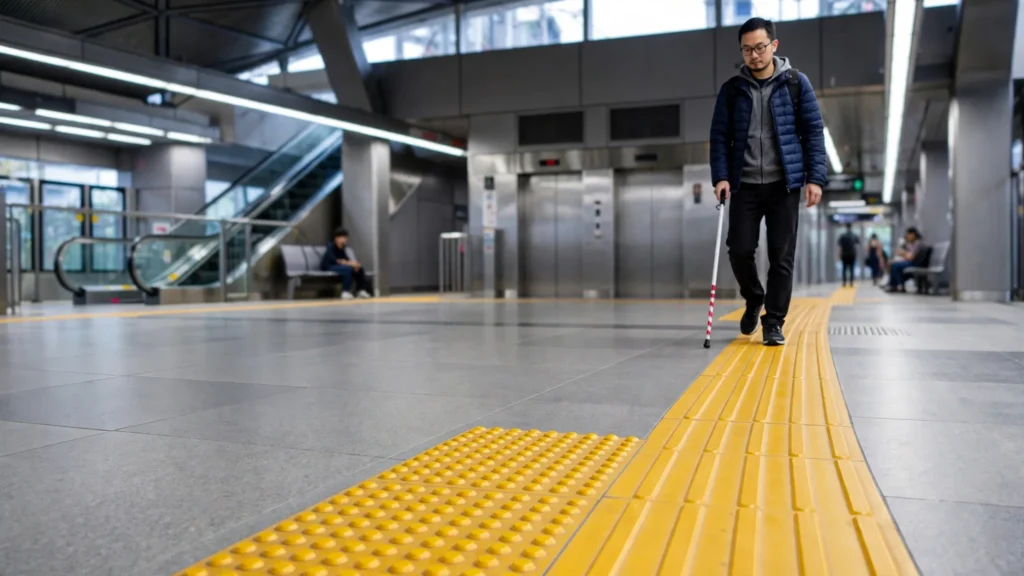
Tactile paving uses raised studs and strips that can be detected underfoot or with a white cane. These physical cues help visually impaired commuters follow a route towards facilities such as lifts, platforms, exits and Passenger Service Centres.
Some tactile surfaces also warn passengers when they are approaching areas that require extra care. Follow the tactile path and check nearby signs when moving through busy station areas.
Braille and Audio Information
Braille and embossed information are available on selected station features, including lift buttons and handrails at newer stations. Audio announcements also provide train and station information that passengers may not be able to read on display screens.
Hearing Enhancement Systems
Passengers who use hearing aids may find it easier to speak with station staff at Passenger Service Centres fitted with Hearing Enhancement Systems. These systems reduce background noise during conversations. LTA states that they are installed at all Thomson-East Coast Line MRT stations, with provision for future stations and selected upgraded transport facilities.
Singapore MRT Access for PMAs and Strollers
A Personal Mobility Aid (PMA) is a device designed to carry someone who has difficulty walking. Common examples include manual wheelchairs, motorised wheelchairs and mobility scooters.
For public transport, PMAs must meet the following size and weight limits:
| PMA requirement | Maximum limit |
|---|---|
| Length | 120 cm |
| Width | 70 cm |
| Height | 150 cm |
| Laden weight, including user | 300 kg |
These limits apply to the PMA and, for weight, the person using it. From 1 June 2026, LTA also introduced updated PMA rules for public paths, including a 6 km/h speed limit for motorised PMAs. Mobility scooter users are subject to Certificate of Medical Need requirements unless they fall within an exempt group.
Parents travelling with strollers can use lifts and wider fare gates. Strollers and other bulky items must also meet the applicable public transport size restrictions. Check the dimensions before travelling if you use a large stroller or mobility device.
How to Find Barrier-Free MRT Routes in Singapore
A little preparation can make an accessible MRT journey easier, especially if you are visiting an unfamiliar station.
- Check your starting and destination stations. Confirm the stations you plan to use and look for accessibility information before leaving.
- Choose an accessible entrance. Not every entrance has the same facilities, so check which entrance connects to a lift.
- Follow lift signs. Look for wheelchair symbols and Priority Use signs around the station.
- Use tactile paths where available. These help visually impaired passengers reach key station facilities.
- Enter through the wider fare gate. Use the gate marked for wheelchair or priority access.
- Take the lift to the platform. Follow the signs rather than using stairs or escalators.
- Check the boarding area. Look for wheelchair symbols and designated priority boarding areas before the train arrives.
If you need help at any point, approach staff at the Passenger Service Centre.
What Happens If an MRT Lift Is Not Working?
A lift outage can affect a passenger’s planned route, particularly if they cannot use stairs or escalators. Check station notices and the relevant train operator’s service updates before travelling. If you are already at the station, speak to staff and explain your destination and accessibility needs.
Staff can advise whether another accessible route is available or whether you should use a different station or transport option. Do not assume that an alternative entrance will have the same facilities. If you are unsure, ask before continuing your journey.
Frequently Asked Questions
Is every MRT station in Singapore wheelchair accessible?
Yes. All Singapore MRT and LRT stations have barrier-free access routes, with facilities such as lifts and accessible pathways.
Do all Singapore MRT stations have lifts?
MRT stations have lifts for passengers who need step-free access. However, not every station entrance has its own lift, so check the accessible entrance before travelling.
Do wheelchair users pay extra to use MRT lifts?
No separate accessibility fee applies to using station lifts, wider fare gates or accessible routes. Passengers still pay the normal public transport fare for their journey.
Can mobility scooters be used on Singapore MRT?
Mobility scooters that qualify as PMAs can be used on public transport when they meet the applicable size and weight limits. Users should also check the latest LTA requirements for mobility scooter certification.
How do visually impaired passengers find their way around MRT stations?
Tactile guiding paths, detectable warning surfaces, Braille features and audio information help visually impaired commuters move around stations and locate facilities.
What should I do if an MRT lift is not working?
Check operator service updates and ask station staff for help. They can advise on an alternative accessible route or another suitable travel option.
Conclusion
MRT Barrier Free Access makes train travel in Singapore more manageable for wheelchair users, seniors, families and passengers with visual or hearing impairments. Lifts, wider fare gates, step-free routes and tactile guiding systems support different stages of a journey. Before travelling, check your station entrance and any lift service updates so you can plan a route that suits your needs.
[…] Entrance Guide Singapore: How to Find the Right Station Entrance (2026) MRT Barrier Free Access Singapore: Wheelchair Facilities, Lifts & Accessible Routes (2026) MRT Accessibility Guide Singapore: Wheelchair Access, Lifts and Facilities MRT Bicycle […]