

 By admin
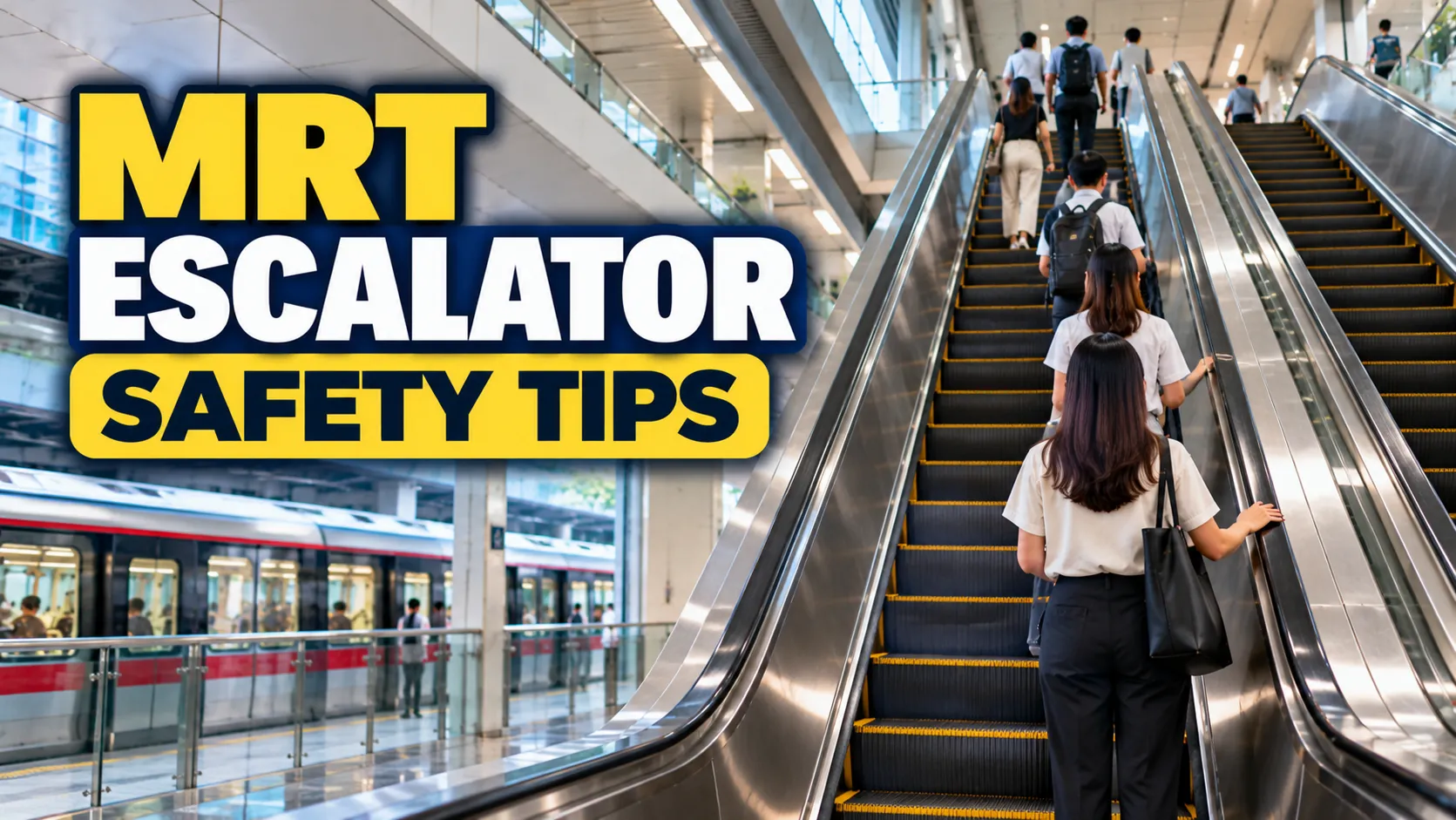
To use Singapore MRT escalators safely, hold the handrail, stand steadily on the steps and follow station signs. This MRT Escalator Guide covers practical safety rules, local commuter etiquette, station exits and lift alternatives for passengers who need step-free access. Whether you travel by train every day or are visiting Singapore for the first time, a few simple habits can make your journey safer and less stressful. From busy interchange stations to escalators leading towards street-level exits, knowing where to stand, how to board and what to do when an escalator stops can make a real difference.
TL;DR — Singapore MRT Escalator Rules at a Glance
- Hold the handrail and keep your balance while riding.
- Follow yellow step markings and posted safety instructions.
- Move away from the landing instead of stopping at the top or bottom.
- If an escalator is faulty, follow station staff instructions and closure signs.
- Passengers using wheelchairs or needing step-free access should look for an accessible lift route.
- Keep bags secure, supervise children and avoid rushing on crowded escalators.
How to Use MRT Escalators in Singapore
Check the Direction Before Boarding
Before stepping onto an MRT station escalator, check the signs and arrows around the entrance. Singapore stations can have several levels, including the platform, concourse and street level. At interchange stations, a few extra seconds spent checking the signs can save you from heading towards the wrong platform or exit.
Look for directional arrows, exit numbers and signs showing the way to connecting train lines. If you’re unsure, ask station staff rather than following the crowd blindly. A busy escalator may lead towards a different exit from the one you need.
Board and Exit Safely
Step onto the moving escalator carefully and hold the handrail. Keep your feet within the step boundaries, and make sure your bags, clothing and loose items stay clear of the sides. Avoid rushing to catch up with someone in front of you.
When you reach the top or bottom, step off promptly and continue walking. But don’t push past other passengers just to get off faster.
Keep the Landing Clear
The landing is the area where passengers step on or off an escalator. Stopping there to check your phone, read a message or wait for friends can create a bottleneck, especially during peak hours. Move to a safe spot away from the escalator before checking directions or gathering your group.
Singapore MRT Escalator Safety Rules
Escalators are part of everyday train travel, but a crowded station can make a small mistake more likely. These MRT escalator safety tips are useful for daily commuters, tourists and families travelling with children.
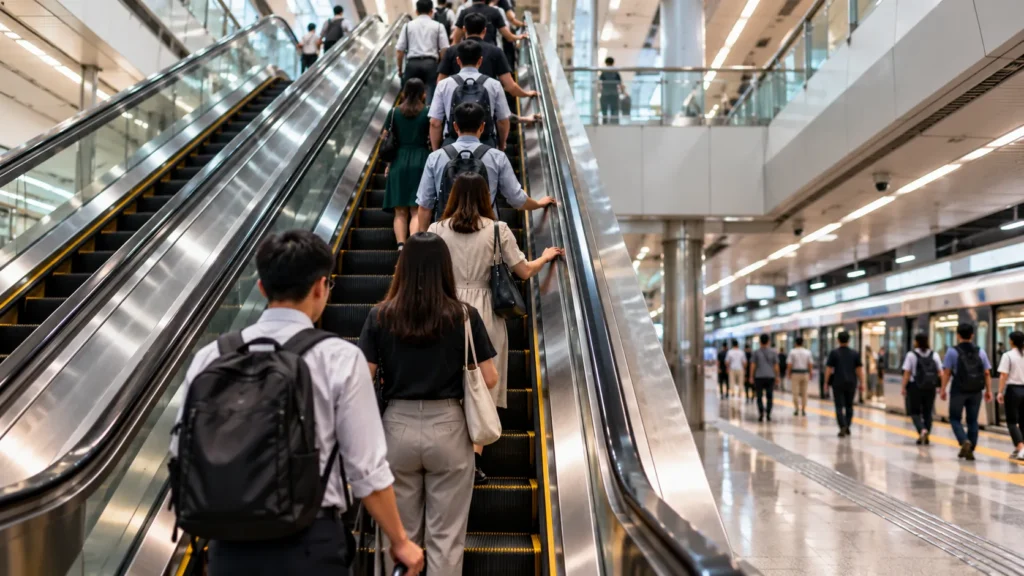
Hold the Handrail and Stand Steadily
Hold the handrail while riding and keep your balance. Sudden movements, crowded steps and loose footwear can increase the risk of a fall. Give the passenger ahead enough space, and avoid leaning against the side panels.
Follow Yellow Step Markings
Many escalators have yellow markings along the step edges. Watch where you place your feet and follow the safety instructions displayed at the station. Keep shoes, bags and clothing away from the sides and moving parts.
Avoid Running, Pushing and Distractions
Running on an escalator can cause you to lose your balance or collide with another passenger. Avoid pushing through a crowd, even when your train is arriving soon. Put your phone away while boarding and stepping off, so you can pay attention to the people around you.
Travel Carefully with Children and Luggage
Keep children close and supervise them throughout the ride. Secure backpack straps, shopping bags and suitcase handles before boarding. If you’re carrying bulky luggage or travelling with a young child, consider using a lift where available.
MRT Escalator Safety Checklist
| Situation | Recommended action |
|---|---|
| Boarding | Step carefully and hold the handrail |
| Riding | Stand steadily and follow posted signs |
| Carrying bags | Keep belongings secure and away from moving parts |
| Reaching the landing | Step off and move clear of the exit |
| Spotting a hazard | Alert station staff when safe |
MRT Escalator Etiquette in Singapore
Singapore’s MRT network gets particularly busy during weekday morning and evening peak periods. A little consideration helps people move through stations without unnecessary delays.
Avoid blocking the escalator with shopping bags, standing in groups across the landing or stopping suddenly at the exit. If someone needs extra time to board or step off, give them room rather than pushing past.
You may see commuters standing on the left and leaving the right side open for people who wish to walk. This is a long-standing local convention, but it should not be presented as a universal official rule for every station. Follow posted instructions and prioritise safe movement over rushing.
And remember, leaving space for other passengers matters more than reaching the platform a few seconds earlier. If the escalator is crowded, wait for a suitable gap instead of squeezing onto a step.
MRT Escalator vs Lift — Which Should You Use?
An escalator can be convenient for moving between station levels, but it isn’t suitable for every passenger. Your mobility, luggage and the station’s layout all matter.
When an Escalator Is Suitable
Escalators can work well for passengers who can stand steadily, board without assistance and step off safely. Hold the handrail and avoid carrying items that make it difficult to maintain your balance.
When Lift Access Is More Suitable
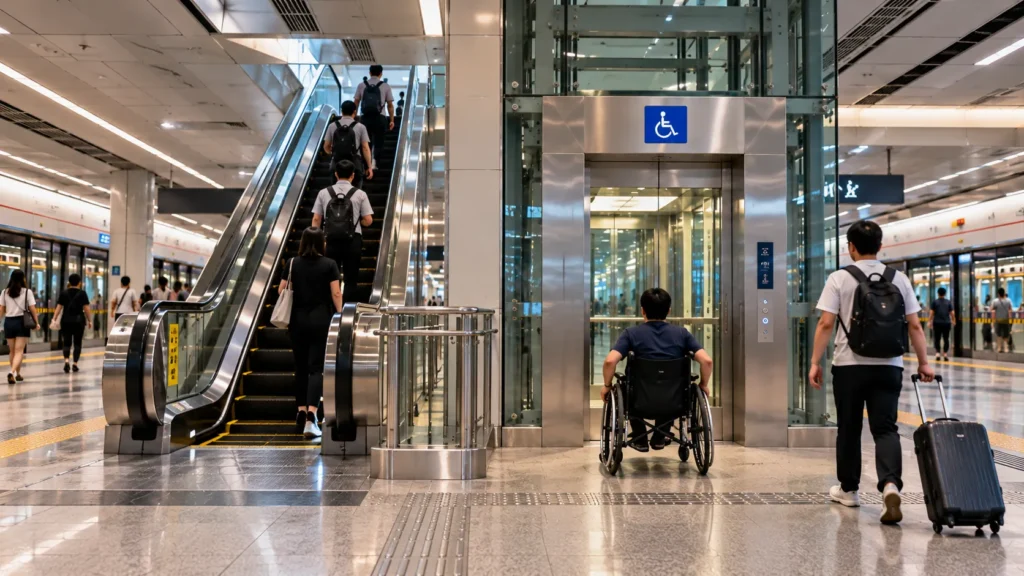
Passengers using wheelchairs need an accessible lift rather than an escalator. Lifts are also often more convenient for people with limited mobility, parents with prams and travellers carrying heavy suitcases.
How to Find a Barrier-Free Route
Look for lift symbols and accessibility signs around the station. If you can’t find a suitable route, ask station staff for assistance. Lift locations and access arrangements vary by station, so check the available route before travelling if step-free access is necessary.
| Feature | Escalator | Lift |
|---|---|---|
| Wheelchair access | Not suitable for wheelchair travel | Use an accessible lift |
| Prams and bulky luggage | Requires extra care | Often more convenient |
| Step-free journey | No | Yes, where the route is accessible |
| Finding the route | Follow escalator signs | Look for lift symbols |
What to Do If an MRT Escalator Stops Working
An escalator that stops suddenly can surprise passengers, particularly during busy periods. Stay calm and pay attention to the people around you.
Stay Calm and Follow Instructions
If the escalator stops, keep your balance and avoid sudden movements. Don’t push past other passengers or attempt to jump off the steps. Follow instructions from station staff and move away carefully when it is safe to do so.
Report a Fault or Safety Hazard
If you notice unusual noise, shaking, damaged steps or another safety concern, inform station staff. Avoid touching mechanical parts or attempting to repair anything yourself. Use the relevant train operator’s reporting channel if you need to report a problem after leaving the station.
Find an Alternative Route
If an escalator is marked out of service, follow the closure signs. Ask staff whether another escalator or an accessible lift is available. Don’t enter a closed area or use equipment that has been taken out of service.
| Problem | What to do |
|---|---|
| Escalator out of service | Follow closure signs and use an alternative route |
| Unusual noise or movement | Inform station staff |
| Sudden stop | Stay balanced and follow instructions |
| Injury or immediate danger | Seek staff or emergency assistance |
An emergency-stop button is intended for situations that require an immediate stop, not ordinary delays or convenience. Follow the station’s posted instructions and use it when an emergency warrants it.
How to Find MRT Escalators and Station Exits
Finding the correct MRT escalator is easier when you check the station signs before leaving the platform. Look for exit numbers, street names, nearby landmarks and directions to connecting train lines.
At interchange stations, check whether you need to reach another platform, the concourse or street level. These destinations may require different routes, even within the same station.
Lift and escalator symbols can also help you identify the route that suits your needs. If an escalator is temporarily closed, follow the current notices rather than assuming your usual route is still available.
For visitors, it can help to check your destination’s exit number before arriving. You’ll spend less time standing near the landing while trying to work out where to go next.
MRT Escalator Guide — Frequently Asked Questions
Can you walk on escalators at Singapore MRT stations?
Some commuters walk on escalators, while others stand. Follow the station’s safety instructions, avoid rushing and leave enough room for people around you. The familiar left-side standing convention should not be confused with a universal official rule.
What should you do if an MRT escalator stops?
Stay balanced, avoid pushing and follow staff instructions. If you notice a fault or someone is injured, alert station staff and seek assistance when needed. Use an alternative route if the escalator has been closed.
Can you use an MRT escalator with a stroller?
Extra care is needed when travelling with a stroller. A lift is often a more convenient option, especially in crowded stations. Check station signs and use the accessible route that is available.
Are MRT escalators suitable for wheelchair users?
No. Wheelchair users should use an accessible lift and check that the route between the platform and destination is step-free. Ask station staff for help if you cannot locate a suitable route.
How can I report a faulty MRT escalator in Singapore?
Tell station staff about the problem and provide the escalator’s location, such as the station name and nearby exit or level. You can also use the relevant rail operator’s official reporting channel.
Final Tips for Safer MRT Escalator Travel
Hold the handrail, watch your footing and keep the landing clear. Check station signs before boarding, and use a suitable lift route if you need step-free access. If an escalator appears faulty, report it to station staff rather than trying to fix it yourself. This MRT Escalator Guide offers a practical starting point for safer journeys around Singapore’s train network.
[…] find MRT Station Toilets in Singapore, follow the toilet signs inside the station, check available station information and […]