

 By admin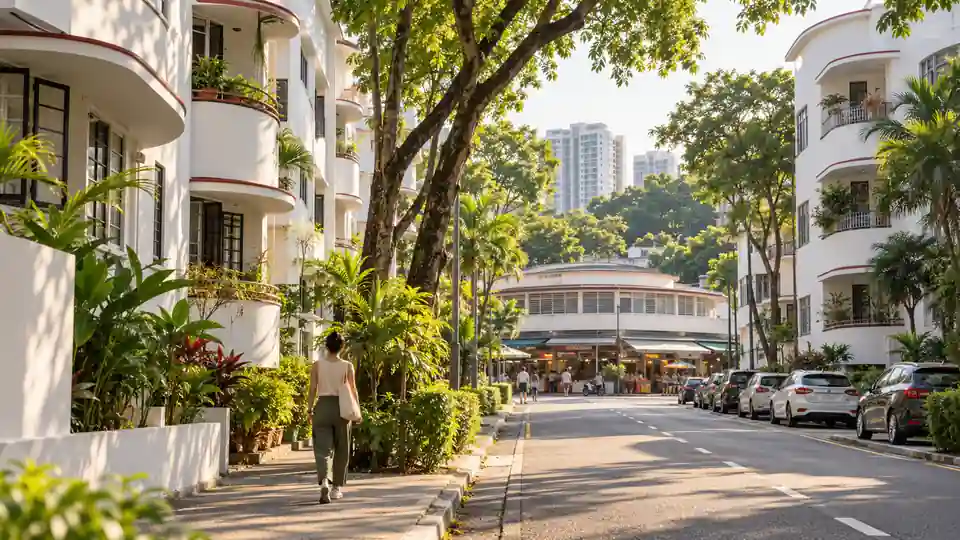
Tiong Bahru is a Singapore neighbourhood where a morning at the market can lead into a walk past curved prewar flats, independent shops and streets that still function as an ordinary residential estate. Its appeal lies in that mix. You can come for breakfast or architecture, but the most rewarding visit makes room for both and remembers that people live here.
The neighbourhood is frequently described as one of Singapore’s earliest public housing estates. Its conserved blocks tell a story of planned urban living before the Housing and Development Board era, while the market and surrounding businesses keep it active today. This Tiong Bahru guide covers the heritage, practical walking route, food choices and etiquette that make a first visit easier.
Where is Tiong Bahru?
Tiong Bahru lies close to central Singapore, west of the downtown core. It is a neighbourhood rather than a single attraction. The conserved estate, market, MRT station and surrounding streets cover different parts of the area, so a map pin labelled “Tiong Bahru” is too vague for a specific meeting place.
Tiong Bahru MRT station on the East-West Line is a useful arrival point. From there, use a pedestrian map to reach the market or the conserved blocks. Depending on your starting point and mobility needs, a bus or taxi may get you closer to a particular stop. The walk from the station is part of the outing, but it can feel longer in midday heat than it looks on a map.
The National Heritage Board’s Tiong Bahru Heritage Trail begins at the market and food centre and covers several points in and around the estate. That official trail is a sound framework for a self-guided walk. Download or open its current map before you start so you can distinguish the conserved area from later development.
Why Tiong Bahru matters
The Urban Redevelopment Authority identifies Tiong Bahru as Singapore’s first comprehensively planned modern housing estate. The Singapore Improvement Trust developed the early estate before the creation of the Housing and Development Board. The National Library Board places the beginning of development in the 1920s and describes its architectural, cultural and historical significance.
Those statements do not mean every building you see dates from the same year. The neighbourhood developed over time, and the present streets include conserved prewar blocks, later buildings and contemporary businesses. Read a heritage marker or official trail entry for a particular building rather than assigning an age from its appearance alone.
The value of the estate is not only architectural. A housing development is a place of routines: shopping, commuting, visiting neighbours and eating together. The market continues to make that daily life visible. A visitor can appreciate the façades while recognising that the neighbourhood’s meaning comes from the people and uses around them.
The architecture to look for
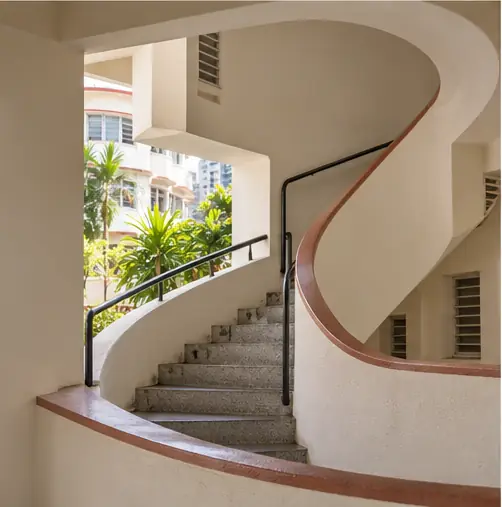
Curving corners, horizontal lines, rounded balconies and understated façades are among the features visitors notice in the conserved blocks. Their forms have often been associated with streamlined modern design. Instead of searching only for one famous camera angle, walk slowly and compare corners, stairwells, windows and the way each building sits beside the street.
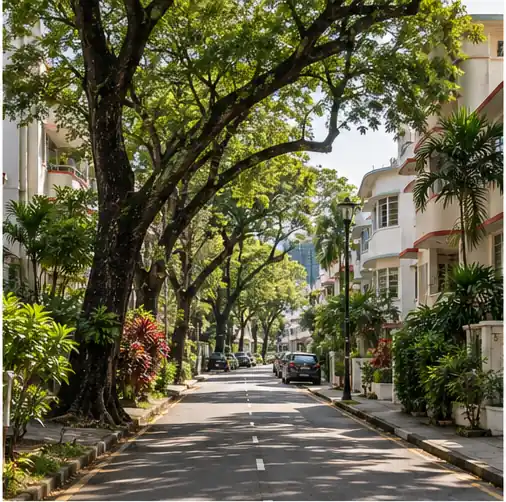
Look at the scale. Many blocks are low-rise, and the relationship between homes, lanes and small businesses differs from that of a newer high-rise estate. The buildings were designed for daily living rather than for visitors to photograph. A shaded five-minute pause can reveal more than a hurried series of images.
Conservation protects significant physical character, but it does not freeze every detail. Shops change, owners maintain homes and the surrounding city evolves. The URA conservation material provides a better explanation of the estate’s significance than a claim that every façade is completely untouched. Take care not to enter residential corridors or private spaces to inspect architecture.
How to photograph the estate respectfully
Photograph from public streets and paths. Include the curve of a building and its surrounding trees or streetscape rather than aiming a lens into a home. Avoid blocking a doorway, sitting on someone’s steps or using a residential corridor for a portrait session. If a person is prominent in your frame, ask permission.
Morning light can make the forms easier to read, but weather and shade change quickly. A wide shot tells the urban story, while a detail photograph can show railings or corners. Be careful at road crossings and do not step into traffic for a symmetrical composition. The best photo is not worth inconveniencing a resident or compromising safety.
Tiong Bahru Market and Food Centre
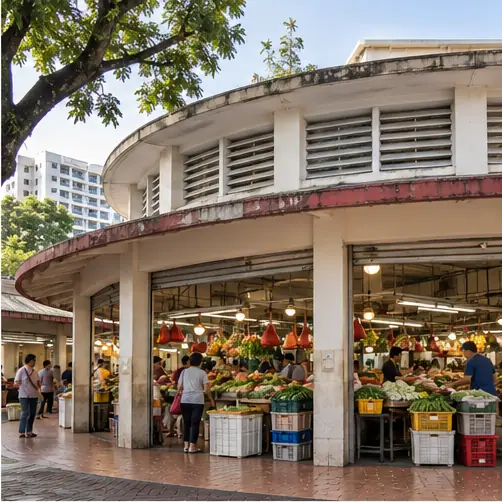
The market and food centre form a natural starting point for a visit. The National Heritage Board treats the site as the heart of its trail, reflecting its longstanding role as a place where residents and visitors shop and eat. It combines the practical rhythm of a neighbourhood market with the draw of a well-known hawker destination.
Arrive hungry but with a flexible plan. Individual stalls have their own operating days and hours, and a famous name may be closed or have a queue. Walk around first to see what is open. Choose food that appeals to you, check the displayed price and ask about ingredients if you have dietary needs. Carry some time in your schedule for a slow meal rather than treating every stall as a box to tick.
At the market, notice how people shop for everyday ingredients and household needs. This is not simply a backdrop to the food centre. Keep aisles clear, handle produce only when invited and do not obstruct vendors while photographing. A working market is most interesting when you observe it with courtesy.
Eating with consideration
Peak meal periods can make seats scarce. Follow the food centre’s current table and tray-return instructions, share space politely and clear your place for the next diner. If travelling with a group, avoid occupying more seats than you need while others queue. Bring a tissue or small cleaning item if you prefer, but do not leave disposable waste behind.
Do not rely on an old “best stalls” list as a guarantee. Recipes, operators and opening patterns change. Try comparing a familiar dish from a stall you can see operating with something new to you. The goal is a satisfying meal in a real neighbourhood, not a race to complete a ranked list.
Independent shops and cafés
The conserved estate has attracted small shops and cafés as well as its long-established everyday businesses. Bookshops, design-oriented stores and bakeries are often part of the neighbourhood’s appeal, but a particular tenant may change. Check a named shop’s current address and hours if you are travelling specifically for it.
Take time to look at what each store offers rather than assuming all independent shops are interchangeable. One may specialise in books, another in home goods, another in a short coffee break. Ask before photographing an interior or a display. If you use a café as a rest stop, order appropriately and be mindful of others waiting for seats.
The newer businesses exist alongside residents and long-running neighbourhood services. A visit that focuses only on trendy shops misses the estate’s broader life. Notice the traditional storefronts and daily errands as well as the more photogenic windows. Respect the fact that a residential street is not a theme park.
How to get to Tiong Bahru
MRT and walking
Take the East-West Line to Tiong Bahru MRT station and use a current map for the walk to the market or conserved estate. Check the exit that suits your destination and any lift requirement. Station exits and pedestrian routes can change with works, so follow on-site signs rather than relying on a decades-old sketch.
Allow more time if you are with children, have mobility needs or intend to stop for photographs. The market and the most recognisable conserved blocks are not the same point. Choose which you want to see first, then build a route between them. Comfortable shoes and water are more useful than a tightly timed schedule.
Bus, taxi and cycling
Buses serve roads around the neighbourhood. A live route planner can identify the best stop from your starting location. Check both the stop name and direction of travel. A bus may reduce walking for someone who has difficulty in the heat, although waiting and transferring can also add time.
A taxi or private-hire vehicle can drop you near a specific destination where stopping is permitted. Set the market or another clear landmark as the destination rather than the broad neighbourhood name. For collection, agree on a safe location before the driver arrives. Residential roads should not become informal waiting areas.
If cycling, follow traffic rules and marked routes, slow down on narrow streets and park only where allowed. Walking is the best way to inspect architecture and shopfronts at close range. A bicycle can be useful for reaching the neighbourhood but less convenient for weaving through market crowds.
A self-guided heritage walk
Begin at Tiong Bahru Market and Food Centre, the opening point in the National Heritage Board trail. Eat or look around first, then read the official trail’s material before walking into the conserved housing area. The map helps you connect buildings and community sites rather than treating each as an isolated photograph.
Move at a pace that lets you notice building forms, small public spaces and everyday businesses. Use public paths and crossings. Read markers where available, and do not assume a private apartment block is open for exploration. A respectful walk can be detailed without crossing a boundary.
Finish at a café, shop or transit stop that suits your energy. If a trail route is longer than expected in hot weather, shorten it. The official guide remains useful even if you complete only part of it. There is no requirement to visit every stop in one outing.
What to look for along the route
Compare rounded and straight building corners, horizontal window bands, sheltered walkways and the relationship between homes and shops. Look for signs of different periods of use rather than assuming a single uniform architectural style. An older building can house a new café; a modest storefront can serve residents for years.
The trail also tells community stories. Read the explanations of schools, gathering places or other sites included on the current route. Architectural appreciation becomes richer when connected to daily life. If you are visiting with children, invite them to identify the practical purpose of a covered walkway or a market, not just the shape of a façade.
Best time to visit Tiong Bahru
Morning often suits the market and an outdoor walk before the strongest heat. A breakfast-focused visit also leaves time to explore the conserved streets. However, not every stall or shop opens early. If a specific place matters, verify its own hours and closing day directly.
Afternoon can work for cafés and shops, but a long architecture walk may be uncomfortable in direct sun. Break it into short segments and drink water. Weekends can be busier at popular food and retail stops, while a weekday may reveal more of the estate’s routine pace. The best time depends on whether you want food, photography or a quieter walk.
Rain is a normal planning factor in Singapore. Some paths and storefronts have shelter, but a heritage route may include exposed crossings. Carry an umbrella, watch for slippery surfaces and seek proper shelter during lightning. Do not force a full outdoor route simply because it was written into a timetable.
How long should you spend?
A market meal and short walk can fit into a modest morning. Reading the trail, photographing architecture and browsing shops can make the visit several hours. Choose the depth you enjoy. A person interested in urban history may spend more time on a few blocks than someone whose main purpose is breakfast.
Build a flexible plan around one priority and one optional addition. For example, start with breakfast, then walk the conserved area; if energy remains, visit a bookstore or café. This prevents a closed stall or sudden shower from feeling like a failed outing. A neighbourhood is often best explored with room to wander.
| Visit goal | Start with | Add if time allows |
|---|---|---|
| Food | Market and food centre | Short walk past conserved flats |
| Architecture | Official heritage trail map | Market meal and a shop stop |
| Relaxed morning | Breakfast | Bookshop or café and a few streets |
| Family visit | Short route and meal | One heritage story children can follow |
Visiting with children or access needs
The market can interest children because it connects food to the everyday work of shopping and cooking. Keep them close in crowded areas and around roads. A short architecture game—finding rounded corners or different balcony shapes—can make a heritage walk engaging without turning it into a long lecture.
For a stroller or mobility aid, inspect the current accessible route from the MRT, market entrances and any shop you want to enter. Older buildings and individual businesses may have different doorway conditions. Contact a specific venue for an essential access requirement. Plan rest stops and avoid a route that depends on uninterrupted walking in the heat.
Older family members may prefer to start at the market and take a shorter circuit. There is no need to complete every trail point. A taxi or bus can help with arrival or departure, but confirm the permitted drop-off location and allow time to cross roads safely.
Resident-friendly visitor etiquette
Stay on public paths, keep voices moderate near homes and avoid photographing into windows. Do not treat stairwells, corridors or private gardens as photo sets. If a resident asks for space, give it promptly. A quiet visitor can enjoy the architecture without making everyday life harder for the people who occupy it.
Support businesses respectfully: queue where indicated, check prices and opening hours, and leave tables and paths clear. At the market, return trays or clear your place according to current instructions. Carry rubbish until you find a bin. This is a small neighbourhood with limited room for careless groups.
When sharing photographs, describe what you learned rather than using the estate as an anonymous aesthetic backdrop. Avoid claiming a specific building is a historic landmark without checking the official trail or conservation material. Accuracy is part of respecting a place.
Common misconceptions
Tiong Bahru is sometimes described as if every part of it is an old estate. In reality, the neighbourhood includes different building periods and functions. Use the URA conservation map and National Heritage Board trail to identify the historic area. Another misconception is that the market is only for visitors; it remains a place of everyday shopping and meals.
“Art Deco” is a convenient shorthand often used in travel writing, but it can flatten architectural distinctions. Observe the forms and read the conservation material instead of applying one label to every block. Similarly, a popular café does not define the entire neighbourhood. The mix of homes, market, shops and public spaces is the story.
Finally, an official trail is a guide, not a race. Completing fewer stops thoughtfully is worthwhile. If a route is closed or inaccessible, find a public alternative rather than entering a restricted area to preserve your itinerary.
Planning a fuller day nearby
Tiong Bahru can be a stand-alone morning or one part of a wider Singapore day. Pairing it with another district makes sense if you have comfortable transport connections and a clear change of pace. Avoid stacking several outdoor walks at midday. Put a meal and rest between them.
Choose your next stop according to interest rather than geographic proximity alone. If you enjoyed the market, another food destination could offer a comparison. If the architecture held your attention, a museum or heritage route may be a natural continuation. Check operating hours for the second stop independently and allow for transit.
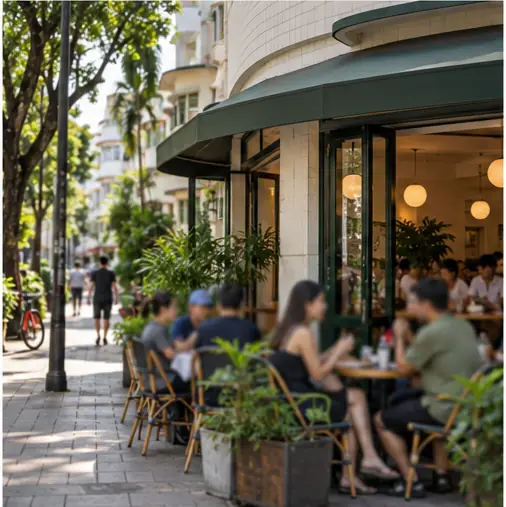
Returning to Tiong Bahru at another hour can also be more rewarding than rushing onward. A quiet weekday walk feels different from a busy weekend breakfast. There is enough detail in the streets to justify a repeat visit without needing a new checklist.
Frequently asked questions about Tiong Bahru
What is Tiong Bahru known for?
It is known for an early planned housing estate, conserved low-rise blocks, its market and food centre, and a mix of longstanding and newer small businesses.
Which MRT station should I use?
Tiong Bahru station on the East-West Line is a convenient starting point. Use a current pedestrian map for the market or conserved area you actually want to visit.
Is there an official heritage trail?
Yes. The National Heritage Board publishes a Tiong Bahru Heritage Trail that begins at the market and connects community and architectural sites.
Is Tiong Bahru Market open every day?
Individual stalls set their own schedules, and facilities may have maintenance or closure periods. Check current information and a specific stall’s hours if it is essential to your visit.
Is the heritage walk free?
Walking public streets and using the self-guided trail does not require a ticket. Food, shopping and optional paid activities have separate costs.
Can I photograph the residential buildings?
Photograph from public areas without blocking paths or pointing into homes. Respect residents’ privacy and follow any signs restricting access.
How much time should I allow?
Allow a relaxed morning for a meal and several heritage stops. A deeper walk and shop browsing can take longer; shorten the route in heat or rain.
Is Tiong Bahru suitable for families?
Yes, particularly for a short market-and-walk outing. Supervise children around roads and crowds, and check stroller access for specific venues.
What should I read before visiting?
The National Heritage Board trail and URA’s Tiong Bahru conservation information offer reliable historical context and a route.
Experience Tiong Bahru at its own pace
Tiong Bahru is best approached as a neighbourhood with a history, rather than a single café or picture spot. Start at the market, use the official trail to understand the conserved estate, notice the practical details of its buildings and give residents room to live their daily lives.
Check the current hours of any food stall or shop you particularly want, bring water for the walk and leave space for an unplanned stop. The combination of architecture, market life and ordinary streets is what makes Tiong Bahru memorable.
Sources
- Roots: Tiong Bahru Heritage Trail
- Roots: Tiong Bahru heritage story
- Roots: Origin and development of Tiong Bahru
- URA: Tiong Bahru Conservation Area
- National Library Board: Tiong Bahru history