

 By admin
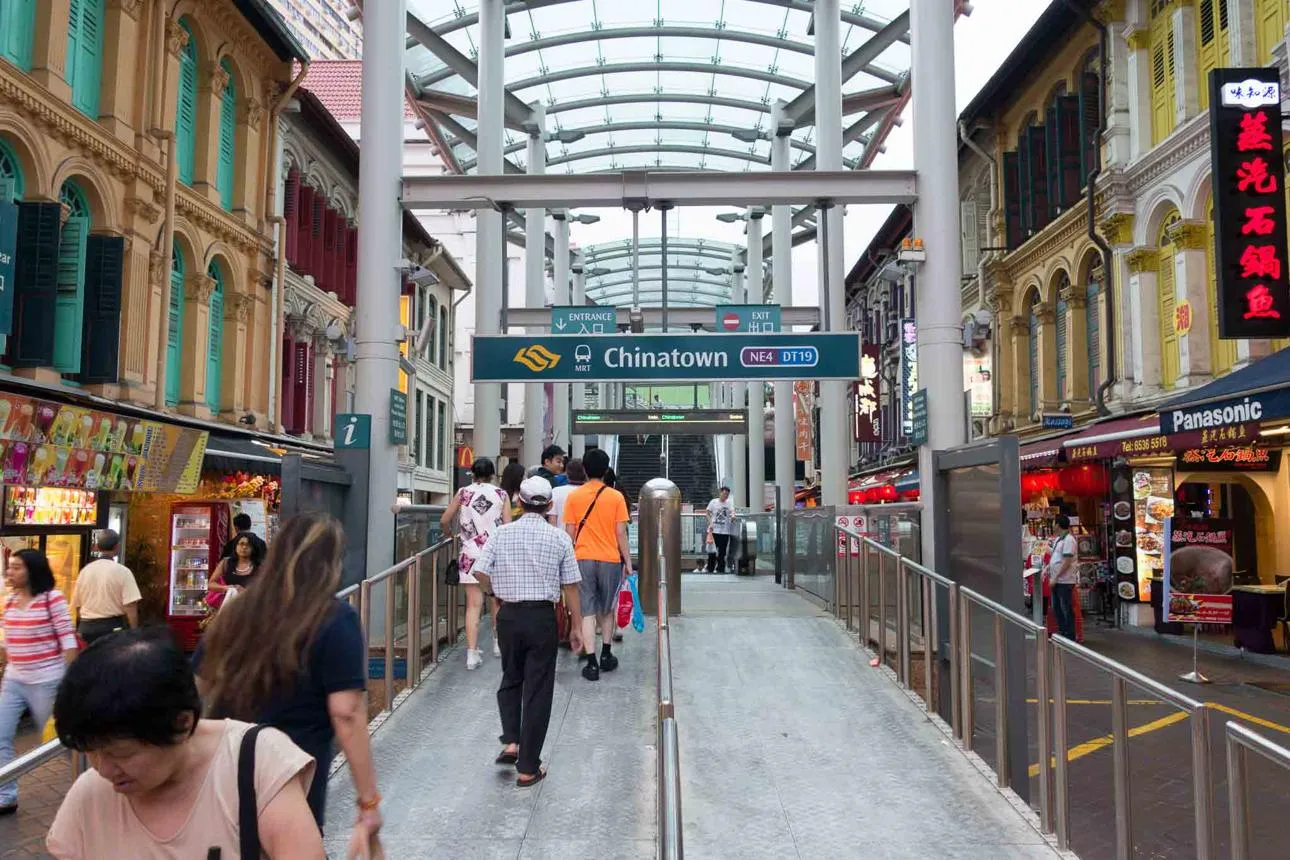
Chinatown MRT station is served by Singapore’s North East Line (NEL) and Downtown Line (DTL), making it easy to reach from many parts of the city. The station codes are NE4 and DT19. The best MRT to Chinatown depends on your starting station, the line you are using and the attraction or street you want to visit. This article covers train connections from popular locations, station exits, fare options and nearby attractions, so you can plan your journey before leaving.
TL;DR: MRT to Chinatown at a Glance
Station: Chinatown MRT
Station codes: NE4 / DT19
MRT lines: North East Line and Downtown Line
For Pagoda Street: Exit A is the relevant exit.
Fare: Depends on your starting station, travel distance and fare category.
Check the current train route, journey time and fare before travelling, particularly if you are heading to Chinatown during peak hours or late in the evening.
Which MRT Lines Go to Chinatown Singapore?
Chinatown MRT is an interchange station on two major Singapore train lines. You can reach it directly if your starting station is on the right line, or transfer from another line when necessary.
North East Line (NEL)
The North East Line serves Chinatown at NE4. It connects the area with stations such as HarbourFront, Outram Park, Dhoby Ghaut and Little India, as well as destinations farther along the line.
If you are travelling from HarbourFront, take the North East Line towards Punggol Coast and alight at Chinatown. This is a direct train journey, so you do not need to change lines.
Passengers coming from other parts of Singapore should check the direction displayed on station signs and train platforms. The correct direction depends on where the journey begins.
Downtown Line (DTL)
Chinatown is also on the Downtown Line at DT19. This line connects the area with stations including Downtown, Bayfront, Bugis, Little India and Stevens.
If your starting station is already on the Downtown Line, you may be able to reach Chinatown without changing trains. Travellers from locations served by other MRT lines may need to transfer at an interchange.
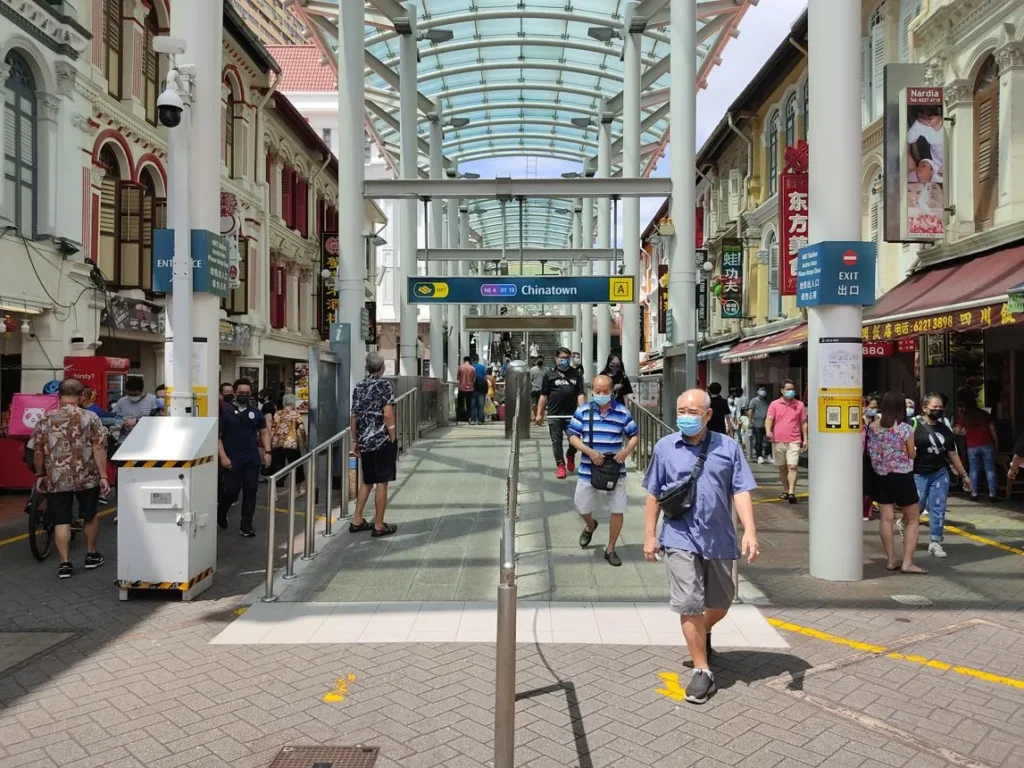
Both lines serve the same station, so check the line colour and station code when planning your journey. SBS Transit identifies Chinatown as NE4/DT19 and lists its exits by nearby landmarks.
How to Get to Chinatown by MRT from Popular Locations
Your MRT route to Chinatown depends on the station closest to your starting point. Here are the main connections to consider.
MRT from Changi Airport to Chinatown
Changi Airport MRT station is connected to the city through two useful routes:
- Take the train from Changi Airport towards Tanah Merah and transfer to the East West Line towards the city.
- Alternatively, take the train towards Expo and transfer to the Downtown Line.
For the Downtown Line option, continue towards Bukit Panjang and alight at Chinatown, station DT19. This gives you a route without another line change after boarding the Downtown Line at Expo.
The airport-to-city connection via Tanah Merah is another option, but you will need to check the onward transfer and direction for your chosen journey. Allow extra time for walking between platforms, airport terminal access and luggage.
MRT from Orchard to Chinatown
From Orchard, one option is to take the North-South Line towards Marina South Pier and transfer at Dhoby Ghaut to the North East Line towards Punggol Coast. Alight at Chinatown.
You can also compare routes using the Thomson-East Coast Line and Downtown Line. The better option depends on your exact starting station, platform access and current service conditions.
MRT from HarbourFront to Chinatown
HarbourFront is one of the simplest starting points because it is on the North East Line.
- Board the North East Line towards Punggol Coast.
- Stay on the train until Chinatown, station NE4.
- Follow the station signs for your intended exit.
No line transfer is required for this route.
MRT from Marina Bay or City Hall to Chinatown
From Marina Bay, the Downtown Line offers a direct connection to Chinatown. Board the train towards Bukit Panjang and alight at DT19.
From City Hall, you can travel on the East West Line towards Tuas Link and transfer at Outram Park to the North East Line towards Punggol Coast. Alight at Chinatown. Compare this route with other available connections before departure.
Route Comparison Table
| Starting location | MRT line or connection | Journey planning note |
|---|---|---|
| Changi Airport | East West Line via Tanah Merah, or Downtown Line via Expo | Compare transfers and total journey time |
| Orchard | North-South Line via Dhoby Ghaut, or alternative connections | Check the route from your exact station |
| HarbourFront | North East Line towards Punggol Coast | Direct train to Chinatown |
| Marina Bay | Downtown Line towards Bukit Panjang | Direct train to Chinatown |
| City Hall | East West Line via Outram Park, then North East Line | Check transfer directions |
Exact journey times vary with waiting time, walking between platforms and service conditions. Use the official journey planner for a current estimate instead of relying on a fixed travel-time figure.
Chinatown MRT Station Exits and Nearby Attractions
Choosing the right exit can save you unnecessary walking, especially if you are visiting Chinatown for the first time. Check the station signs before leaving the paid area, as the exits serve different streets and landmarks.
| MRT exit | Nearby destination or area |
|---|---|
| Exit A | Pagoda Street and the traditional shophouse area |
| Exit C | People’s Park Complex and OG Building |
| Exit D | People’s Park Centre |
| Exit E / Exit G connection | Check station signs for the appropriate side of the interchange |
| Exit F | Nearby hawker stalls and local shops |
SBS Transit’s station information associates Exit A with Pagoda Street, Exit C with People’s Park Complex and OG Building, and Exit D with People’s Park Centre. The station also has exits E, F and G, so follow the current on-site directory for destinations on those sides.
Which Chinatown MRT Exit Is Best for Pagoda Street?
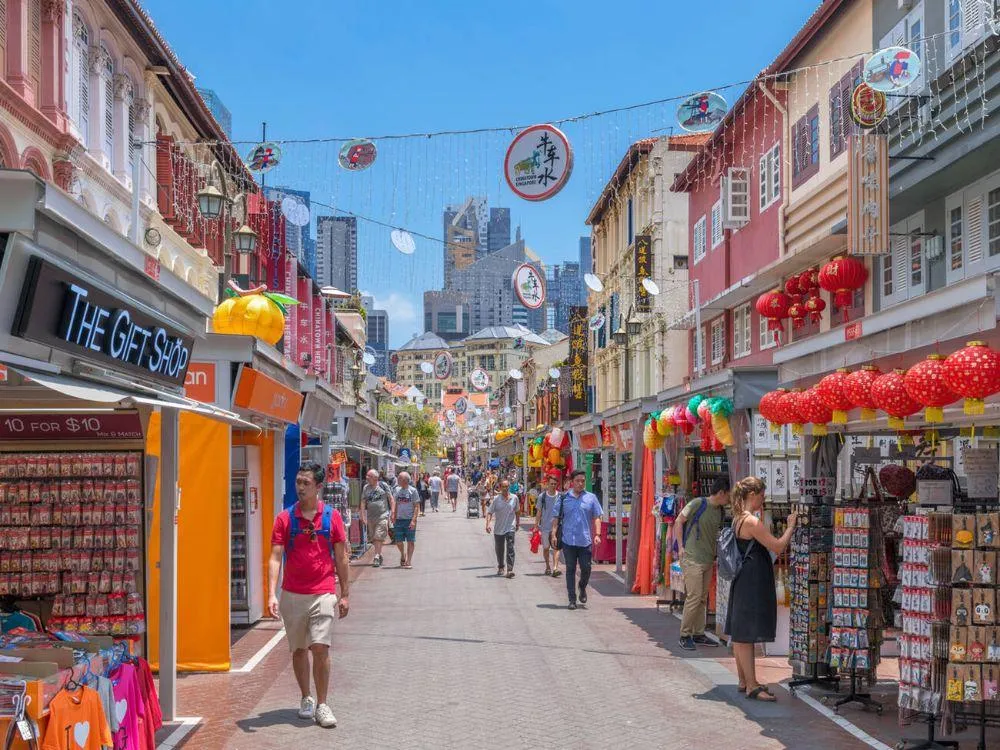
Exit A is the main exit to look for when visiting Pagoda Street. After leaving the station, follow the signs towards the street and its traditional shophouses. The area is popular for souvenirs, small shops, cafés and Chinatown’s heritage streetscape.
If you are meeting friends, agree on a specific landmark rather than simply saying “outside Chinatown MRT.” The station has several exits, and choosing different ones can leave you on opposite sides of the area.
How to Reach Chinatown Complex and Chinatown Point
For Chinatown Complex, check the signs around Exit A and the station directory before leaving. The complex is a well-known local food and market destination in Chinatown.
For Chinatown Point, check the mall’s directional signs from the station concourse. The correct route depends on the exit you use, so confirm the destination on the station directory instead of assuming that every exit leads to the same shopping area.
MRT to Chinatown Singapore — Fares and Travel Costs
Singapore MRT fares are distance-based, so there is no single fare that applies to every journey to Chinatown. The amount depends on your boarding station, fare category and payment method.
| Pricing detail | What to know |
|---|---|
| Adult MRT fare | Depends on journey distance and applicable fare rules |
| Child concession | Eligibility and concession rules apply |
| Contactless bank card | Accepted cards and payment conditions should be checked |
| EZ-Link / SimplyGo | Available card options depend on the travel product |
| Singapore Tourist Pass | Compare pass coverage with your planned journeys |
How to Check Your MRT Fare
Use the official fare calculator to enter your boarding station, Chinatown MRT as your destination and the relevant fare category. This gives you a more useful estimate than a general price range.
LTA lists contactless bank cards, mobile wallets and stored-value cards among the available payment options. Its journey-planning information also explains how fares are calculated across qualifying train and bus transfers.
Visitors planning several trips in one day can compare individual fares with a Singapore Tourist Pass. Check the current pass terms, validity and coverage before buying one. If using a foreign-issued bank card, check whether additional payment fees apply.
Things to Do Near Chinatown MRT Station
Chinatown is a useful starting point for exploring heritage buildings, local food and shopping streets. Several popular places are in the surrounding neighbourhood.
| Attraction | Why visit |
|---|---|
| Pagoda Street | Traditional shophouses, souvenirs and Chinatown shopping |
| Buddha Tooth Relic Temple | A prominent Buddhist temple and cultural landmark |
| Chinatown Complex | Local market stalls and a large food centre |
| Maxwell Food Centre | A popular stop for Singapore hawker dishes |
| Sri Mariamman Temple | A historic Hindu temple in Chinatown |
| Chinatown Point | Shopping, restaurants and indoor retail options |
You can combine several nearby attractions into one walking trip. For example, spend time around Pagoda Street, visit Buddha Tooth Relic Temple and then explore the food options at Chinatown Complex. Maxwell Food Centre is another option if you want to try local hawker dishes.
Remember that places of worship may have visitor rules or restricted areas. Dress respectfully, follow posted signs and check opening hours before making a special trip.
Practical Tips for Taking the MRT to Chinatown
- Check the train direction: Confirm whether the train is heading towards HarbourFront or Punggol Coast on the North East Line, or towards Bukit Panjang or Expo on the Downtown Line.
- Choose your exit before leaving: Look for the exit sign that matches your destination.
- Prepare your payment method: Check that your bank card, mobile wallet or stored-value card is accepted and ready for use.
- Allow extra time: Crowds, platform transfers and walking through the station can add to the journey.
- Check first and last train times: Service timings vary by line and station. Confirm them before travelling early in the morning or late at night.
- Check accessibility: If you need a lift or step-free access, consult the current station information before your trip.
Frequently Asked Questions About MRT to Chinatown
Which MRT line goes to Chinatown Singapore?
Chinatown MRT station is served by the North East Line and Downtown Line. Its station codes are NE4 and DT19. Your best route depends on the MRT station closest to your starting point.
How do I get to Chinatown from Changi Airport by MRT?
From Changi Airport, take the train towards Tanah Merah and connect to the East West Line, or travel via Expo and transfer to the Downtown Line towards Bukit Panjang. Check the current route before leaving.
Which exit is best for Pagoda Street?
Exit A is the relevant exit for Pagoda Street and the nearby traditional shophouses. Follow the station signs after arriving, and check the directory if you are meeting someone at a particular landmark.
How much does the MRT to Chinatown cost?
The fare depends on your starting station, journey distance and fare category. Use Singapore’s official MRT fare calculator to check the current card fare for your specific trip.
Is Chinatown on the Downtown Line?
Yes. Chinatown MRT station is on the Downtown Line as DT19. It is also served by the North East Line as NE4, so passengers on either line can reach the station.
What attractions are near Chinatown MRT station?
Nearby destinations include Pagoda Street, Buddha Tooth Relic Temple, Chinatown Complex, Maxwell Food Centre, Sri Mariamman Temple and Chinatown Point. Choose your exit based on the attraction you plan to visit first.
Conclusion
MRT To Chinatown connects the North East Line and Downtown Line, giving travellers several ways to reach Singapore’s Chinatown. Check your starting station, train direction, fare and destination-specific exit before setting off. With the right exit, you can spend less time finding your way and more time enjoying Chinatown’s food, shops and heritage sites.
[…] to Gardens by the Bay: Stations, Exits & Walking Routes MRT to Chinatown Singapore: Routes, Exits & Travel Time MRT to Orchard Road: Which Station Should You Use? MRT to Sentosa: How to Get There by Train […]