

 By admin
Singapore’s metro system, known as the Mass Rapid Transit (MRT), is one of the easiest ways to travel around the city. This Singapore Metro Guide covers the MRT map, six main train lines, fares, payment methods and practical travel tips for residents and visitors. Whether you are commuting to work, heading to Orchard Road or travelling from Changi Airport, understanding the MRT network can make your journey simpler. You will also find official resources for checking routes, fares and train service updates before leaving.
Singapore Metro Guide at a Glance
- Metro system: Singapore’s MRT connects residential neighbourhoods, business districts and major attractions.
- MRT map: Use the official LTA MRT/LRT map.
- Fares: Train fares generally depend on the distance travelled and applicable fare rules.
- Payment: Eligible contactless bank cards, mobile wallets and transport cards are available.
- Journey planning: Check the LTA journey planner for routes and fares.
- Train timings: Check the first and last train information for your station before travelling.
Singapore MRT Map and Train Network
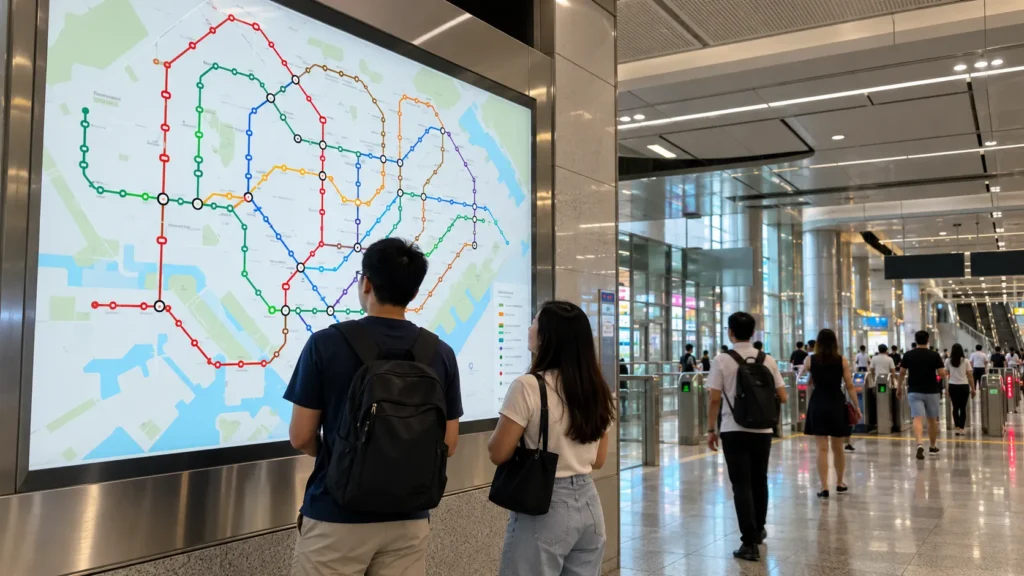
The Singapore MRT map shows the train lines, station names, line colours and interchange stations across the network. Start by finding your current station and destination, then follow the relevant line towards your destination.
Different colours identify different MRT lines. Station codes, such as NS for the North-South Line and EW for the East-West Line, help you recognise the route. At an interchange, you can transfer between connecting lines by following the signs inside the station.
Singapore also has a Light Rail Transit (LRT) system. Unlike the main MRT network, LRT services primarily connect residential neighbourhoods with nearby transport hubs.
Always use the official Singapore MRT map for current network information. Planned extensions, station openings and service adjustments can change the routes available to commuters.
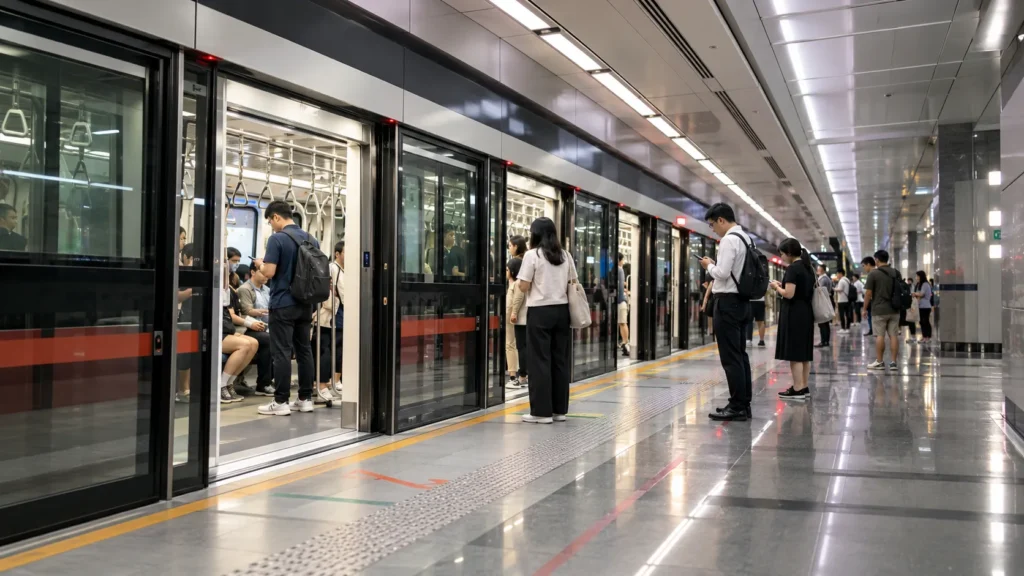
Singapore MRT Lines and Major Stations
Singapore’s six main MRT lines serve different parts of the island. Knowing their names and common destinations makes route planning easier.
| MRT line | Code | Example station or area |
|---|---|---|
| North-South Line | NSL | Orchard |
| East-West Line | EWL | Changi Airport connection |
| North-East Line | NEL | Chinatown |
| Circle Line | CCL | HarbourFront |
| Downtown Line | DTL | Bugis |
| Thomson-East Coast Line | TEL | Orchard Boulevard |
The North-South Line connects northern areas with central Singapore, while the East-West Line serves destinations across the western and eastern parts of the island. Its Changi Airport connection links the airport with the wider rail network.
The North-East Line is useful for reaching Chinatown and HarbourFront. The Circle Line connects several central areas and interchange stations, while the Downtown Line serves destinations such as Bugis and the Downtown Core. The Thomson-East Coast Line adds connections through eastern, central and northern areas.
Check the official map to identify the correct interchange and direction before boarding.
Singapore MRT Fares and Pricing
Singapore MRT fares are generally distance-based. For standard adult travel, the fare depends on the journey length and the applicable fare schedule. Eligible transfers are covered by integrated fare rules, subject to conditions.
The following examples show the published adult card-fare bands applicable on 19 October 2026.
| Journey distance | Adult card fare |
|---|---|
| Up to 3.2 km | S$1.28 |
| 3.3–4.2 km | S$1.38 |
| 4.3–5.2 km | S$1.49 |
| 5.3–6.2 km | S$1.59 |
| 6.3–7.2 km | S$1.68 |
These are examples, not the full fare schedule. The Public Transport Council has announced fare adjustments effective 26 December 2026, so check the updated schedule if travelling on or after that date.
For an exact fare, enter your starting and destination stations in the LTA journey planner. This is more reliable than estimating your fare from the number of stations travelled.
Singapore MRT Payment Methods Compared
You can choose between several payment options depending on your travel plans and whether you already have an eligible card.
| Payment option | Best suited for |
|---|---|
| Contactless bank card | Travellers with an eligible Visa, Mastercard, American Express or NETS card |
| Mobile wallet | Users with a supported contactless card on their phone or smartwatch |
| EZ-Link / SimplyGo card | People who prefer a separate transport card |
| Singapore Tourist Pass | Eligible visitors who want unlimited travel during the pass’s validity period |
Foreign-issued contactless Visa and Mastercard cards incur a S$0.60 foreign bank card administrative fee per day of use when used for public transport. Your bank may also charge additional fees. Check your card’s overseas-use settings before travelling.
A transport card may be more suitable if you want to avoid that daily administrative fee. The Singapore Tourist Pass may suit visitors planning multiple journeys, but compare its current price and conditions with your expected travel costs first.
For current eligibility and payment rules, consult SimplyGo’s contactless bank card FAQs.
How to Use Singapore MRT Step by Step
Using Singapore MRT is straightforward once you understand the signs and payment process.
- Choose your destination. Find the nearest MRT station to your starting point and destination.
- Plan your route. Use the LTA journey planner to check the route, fare and estimated travel time.
- Follow the line signs. Check the line colour, station name and direction shown on the platform signs.
- Change lines if needed. At an interchange, follow the signs for your connecting MRT line.
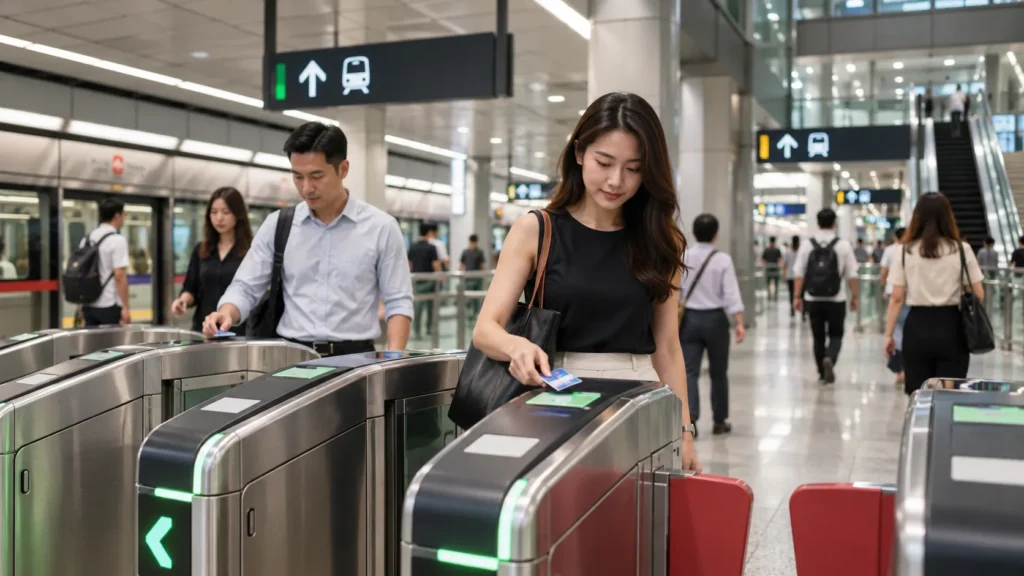
- Tap in and tap out. Use the same contactless card, mobile device or transport card for the entire journey.
- Find the correct exit. Follow the station exit signs for your destination or nearby attraction.
If you are unsure which train to board, check the direction displayed on the platform rather than relying only on the line colour.
Changi Airport to Singapore City by MRT
The MRT is a practical option for travelling from Changi Airport to many parts of Singapore.
Follow the signs to Changi Airport MRT station at Terminal 2 or Terminal 3. From the airport, take the East-West Line connection towards Tanah Merah, where you can transfer to a city-bound train. Your onward route will depend on your destination.
For example, a journey to City Hall or other central areas may require a transfer or a different route depending on current services. Orchard Road also has several MRT stations, so check which station is closest to your accommodation.
Use the LTA journey planner before travelling to confirm the recommended connection, fare and estimated journey time. Allow extra time if you are travelling with luggage or arriving during a busy period.
Singapore MRT Operating Hours and Travel Tips
MRT services generally run from early morning until around midnight, but operating hours vary by line, station and service conditions. The last train may leave earlier than expected for certain connections, so check your station’s timings before starting a late-night journey.
During the morning and evening peak-hour commute, trains and platforms can become crowded. Allow extra time, stand behind platform safety markings and let passengers alight before boarding.
A few other habits make travelling easier:
- Keep your contactless card or transport card ready at the fare gantry.
- Follow directional signs when changing lines.
- Offer priority seats to passengers who need them.
- Keep backpacks close to you on crowded trains.
- Check service alerts for planned adjustments or disruptions.
For the latest information, use official LTA transport resources.
Frequently Asked Questions
What is the Singapore metro system called?
Singapore’s metro system is called the Mass Rapid Transit, or MRT. The network connects many residential, commercial and tourist areas.
How much does a Singapore MRT ride cost?
Adult card fares depend on distance. Published fares on 19 October 2026 start at S$1.28 for journeys up to 3.2 km. Check the current fare schedule before travelling.
Can tourists use contactless bank cards on Singapore MRT?
Yes, eligible contactless bank cards and supported mobile wallets can be used. Foreign-issued Visa and Mastercard cards incur a S$0.60 administrative fee per day of public transport use.
How do I get from Changi Airport to the city by MRT?
Take the airport rail connection and follow the route planner for the required interchange and onward journey. The best route depends on your destination.
Where can I find the latest Singapore MRT map?
The official LTA MRT/LRT map provides the network map and line information. Check it before travelling to account for network changes.
Final Travel Advice
A little planning can make travelling around Singapore much easier. Use the official MRT map to identify your route, compare payment options before your first journey and check current fares and service updates. With the right station, interchange and exit, the MRT is a convenient way to get around the city.
[…] Singapore Metro Guide: Map, Fares & MRT Travel Tips (2026) Singapore Transport Map: MRT Lines, Bus Routes and Travel Guide Singapore Train Guide for First-Time Visitors Singapore Public Transport: How to Travel, Pay and Plan Your Journey Singapore MRT Fare Guide: Fares, Payment Methods & Travel Tips Singapore MRT Card Guide: Prices, Best Options & How to Use Them Yio Chu Kang MRT Guide 2026: Exits, Routes & Nearby Places Jurong East MRT Guide: Lines, Exits & Nearby Places Woodlands MRT Guide: Routes, Exits and Nearby Places Yishun MRT Guide: Exits, Bus Interchange & Nearby Places […]