

 By admin
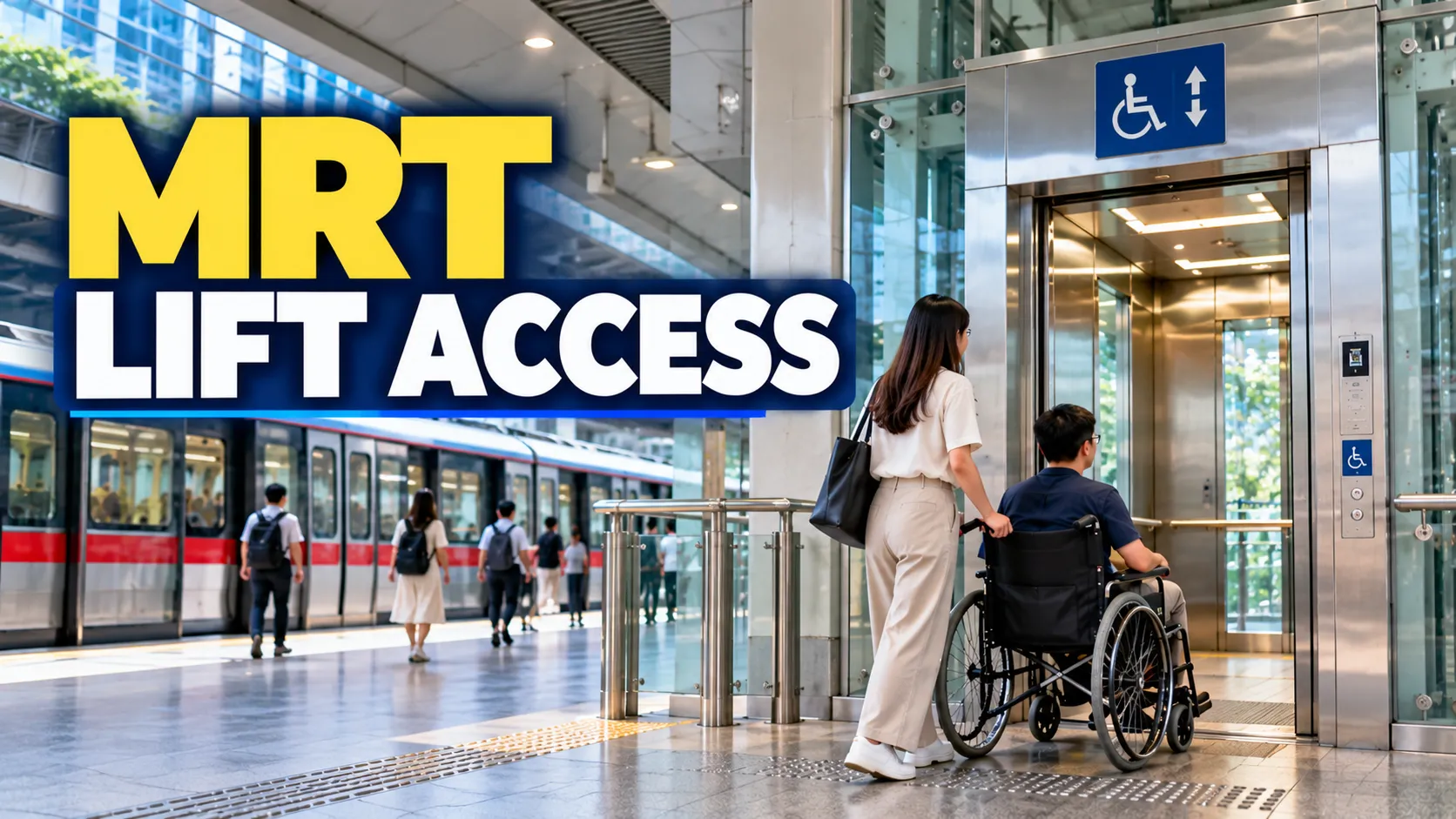
Singapore MRT lift access helps passengers travel between station entrances, concourses and train platforms without relying on stairs. To find a suitable route, follow lift wayfinding signs and check the latest accessibility information from the Land Transport Authority (LTA) or the relevant train operator. MRT station accessibility matters for wheelchair users, elderly passengers, families with strollers and commuters carrying heavy luggage. But finding a lift at one point doesn’t automatically confirm that the entire journey is step-free. Transfers and station exits need checking, too. Here’s how to locate MRT lifts, plan an accessible route and respond if a lift is out of service.
TL;DR: MRT Lift Access in Singapore
To find MRT lift access in Singapore, check station signage, official station information and your full journey route. Confirm that lifts connect the entrance, concourse and platform, including any transfer stations. If a lift breaks down, ask station staff about an alternative barrier-free route before continuing. Check current accessibility updates before travelling, especially if you use a wheelchair or need step-free access throughout your journey.
How to Find MRT Lift Access in Singapore
Look for Lift Wayfinding Signs
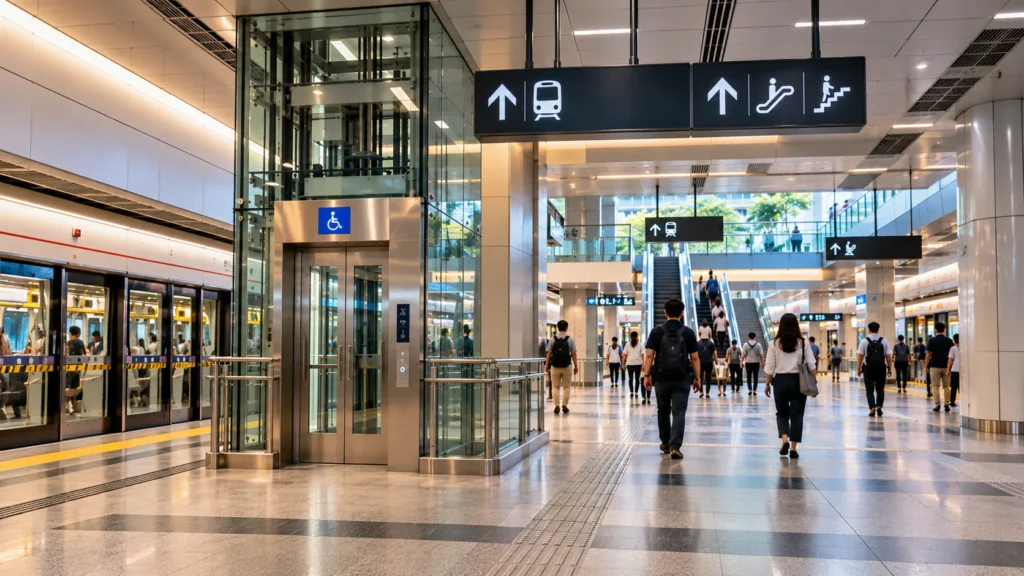
Start by looking for lift symbols at the MRT station entrance. Follow the signs towards the lift rather than assuming the nearest escalator or staircase leads to the same place. At larger stations, lifts may be positioned away from the main pedestrian flow, so allow a little extra time to find them.
Inside the station, check the signs around the concourse and fare gates. Lift directions should help you identify how to reach the platform or a particular exit. Station maps can also help, especially when a station has several entrances or connects with a shopping centre, bus interchange or another MRT line.
If you are unsure whether a route is step-free, ask a member of station staff. A lift may serve one part of the station without providing the most direct route to your intended exit.
Check Your Station Route Before Travelling
Before leaving home, review the full route from your starting station to your destination. Include transfer stations, platform changes and the exit you plan to use. A route that looks straightforward on a standard train map may involve stairs or a longer accessible connection.
If you need wheelchair access, don’t check only the destination station. Confirm access at every point where you will enter, change trains or leave the network. Staff at the Passenger Service Centre can assist when directions are unclear.
| Where you are | What to check |
|---|---|
| Station entrance | Lift signs and the accessible entrance |
| Concourse | Lift directions and accessible fare-gate access |
| Platform | Signs showing the lift route to and from the platform |
| Exit | The step-free route to your intended exit |
Wheelchair and Barrier-Free MRT Access
Wheelchair-Accessible MRT Routes
A barrier-free MRT route connects the relevant parts of a journey without requiring passengers to use stairs. Depending on the station, this can involve a lift from street level to the concourse, an accessible fare gate and another lift or step-free connection to the train platform.
Singapore has developed accessibility features across its public transport network, but the exact route and facilities can differ by station. Check official LTA and train operator information before travelling if you need a continuous wheelchair-accessible route. Don’t assume that a lift near an entrance serves every platform or exit.
Accessible fare gates provide extra space for wheelchair users and other passengers who may find standard gates difficult to use. Follow the relevant signs and ask station staff if you cannot identify the correct gate.

Accessibility for Seniors, Strollers and Luggage
MRT lift access is useful for older passengers, parents with prams and travellers carrying suitcases. Lifts can reduce the need to climb stairs or carry bulky items on escalators. During busy periods, however, you may need to wait for space, so allow additional time for transfers.
Passengers with visual impairments can also use tactile paving and station wayfinding features to help identify routes. If you need further assistance, station staff can explain the available facilities and directions. For a journey with several transfers, checking each station in advance can make the trip less stressful.
MRT Lift Access by Station: What to Check
Check Entrances, Platforms and Exits
Lift locations vary from one MRT station to another. Some stations have several entrances, while interchange stations can have longer internal connections between platforms and exits. That’s why a general station map may not provide enough detail for passengers who need step-free access.
Before relying on a particular lift, check the station name, entrance or exit, platform connection and route to the street. Use official operator information where available, and confirm uncertain details with station staff. Avoid relying on an unverified online directory for an exact lift location.
If you maintain a station accessibility list for future journeys, include the date each detail was checked. Lift arrangements and availability can change during maintenance or station works.
| Station detail | Information to verify |
|---|---|
| Station name | Correct MRT station and line |
| Entrance or exit | Relevant access point |
| Lift location | Officially confirmed location |
| Platform access | Whether the required route is step-free |
| Last checked | Date of verification, if recorded |
A station-by-station lift directory should only include locations that have been checked against reliable information. If a specific lift location or exit number cannot be confirmed, don’t guess.
What to Do If an MRT Lift Is Out of Service
Confirm the Lift Disruption
If an MRT lift is not working, check the notice at the lift and ask station staff to confirm the disruption. Explain where you need to go and whether you require a wheelchair-accessible or otherwise step-free route. Staff may be able to direct you to another entrance or explain the available arrangements.
Don’t assume that a nearby staircase or escalator is a suitable substitute. If you cannot use stairs, confirm the alternative before moving to another part of the station. This is particularly important when the affected lift is the only known step-free connection to a platform or exit.
Plan an Alternative Accessible Journey
If there is no suitable route within the station, ask staff whether your journey should be replanned. Depending on the locations involved, an alternative station, another MRT line or a bus may be an option. But check the full route before choosing it: the alternative station or bus stop must also meet your accessibility needs.
Review current operator notices before travelling again, and allow extra time for changes. A route that works for one wheelchair user may not suit every passenger or mobility aid, so ask for guidance based on your specific destination.
| Problem | Recommended action |
|---|---|
| Entrance lift unavailable | Ask staff about another accessible entrance |
| Platform lift unavailable | Confirm whether a barrier-free alternative exists |
| Exit access unclear | Check official station directions or ask staff |
| Journey disrupted | Recheck the complete accessible route |
The Ministry of Transport has addressed barrier-free commuter routes and lift breakdowns in its public information. For an immediate disruption, though, station staff and current operator notices are the most practical starting points.
MRT Lift Access and Travel Costs
Is MRT Lift Access Charged Separately?
Lift access is a station facility, while train fares cover travel on the public transport network. Check current official fare information for the applicable journey and payment method, and review concession eligibility if you qualify for a concession fare. If a lift disruption means you need a taxi or another transport option, that journey may involve separate costs.
| Cost item | What readers should know |
|---|---|
| Lift use | Check current station information for any specific conditions |
| MRT journey | Fare depends on the journey and fare type |
| Concession travel | Check eligibility and current conditions |
| Alternative transport | Separate charges may apply |
Practical Tips for a Smooth MRT Journey
- Check the accessible route before leaving home, including transfers and station exits.
- Identify the correct entrance and platform connection at each station.
- Allow extra time during peak hours or when travelling with a wheelchair, stroller or luggage.
- Ask station staff for help if lift signs are unclear or a lift is out of service.
- Recheck current accessibility information before starting your journey, especially when travelling to an unfamiliar station.
Frequently Asked Questions
1. How do I find lift access at an MRT station in Singapore?
Look for lift wayfinding signs at the station entrance, concourse and platform. Check official station information and ask staff if you need help confirming a step-free route to a particular exit.
2. Do Singapore MRT stations have wheelchair access?
Singapore’s MRT network includes accessibility features such as lifts and accessible fare gates. Facilities and routes can differ by station, so verify the full route for your starting point, transfers and destination.
3. What should I do if an MRT lift is not working?
Ask station staff to confirm the disruption and identify a suitable alternative. If no accessible route is available, check whether changing stations or using another transport option would work for your journey.
4. How can I find a barrier-free MRT route?
Check the station and journey information provided by the LTA or the relevant train operator. Confirm that the route connects the entrance, concourse, platform and intended exit without requiring stairs.
5. Can I use MRT lifts with a stroller or luggage?
Yes, MRT lifts are useful for passengers travelling with strollers, prams and luggage. During busy periods, you may need to wait for space, so leave extra time for transfers.
6. Is there a separate charge for MRT lift access?
Check current official station information for any specific conditions. Train fares are separate from station facilities, and alternative transport used during a disruption may involve additional costs.
Conclusion
MRT Lift Access in Singapore is easier to plan when you check lift signs, confirm the full barrier-free route and identify the right station exits before travelling. If a lift is out of service, ask station staff about suitable alternatives rather than assuming another route will be accessible. A quick check of current station information can prevent avoidable delays.
[…] passengers with hearing impairments and families with strollers travel more comfortably. The MRT Accessibility Guide covers barrier-free routes, station lifts, tactile guidance, hearing assistance and practical […]