

 By admin

Singapore’s train network connects residential neighbourhoods, shopping districts, business hubs and popular attractions across the island. The Singapore Train Network includes six MRT lines and three LRT systems, giving commuters and visitors plenty of ways to travel without relying on a car. From Woodlands and Tampines to Orchard Road and Marina Bay, knowing which line to take can make daily journeys much easier. The latest official LTA train network map is a useful starting point for checking stations, line connections and service updates.
TL;DR: Singapore Train Network at a Glance
- MRT lines: Six operational lines serve different parts of Singapore.
- LRT systems: Bukit Panjang, Sengkang and Punggol provide local rail connections.
- Train map: The LTA website provides the current MRT/LRT map.
- Fares: Train fares depend on travel distance and payment type.
- Payment: Supported contactless bank cards, mobile wallets and travel cards can be used.
- Travel planning: Check station connections, fares and first/last train timings before leaving.
Singapore Train Network Map: How to Read It
The Singapore MRT map shows the rail lines, station names, line colours and connections between services. You can open the official LTA MRT/LRT map to check the latest network, including any planned service adjustments.
Each MRT line has its own colour and abbreviation. Station codes usually combine letters with numbers, such as NS or EW followed by a station number. These codes help you identify the correct stop, especially when several lines meet at one station.
Here’s a simple way to plan a journey:
- Find your starting station and destination on the map.
- Identify the line serving your starting station.
- Check whether you need to change trains at an interchange.
- Follow station signs for the correct platform and direction.
- Check the journey time and fare before travelling.
And if you are unsure about a route, use the SimplyGo travel guide to check train connections and fares.
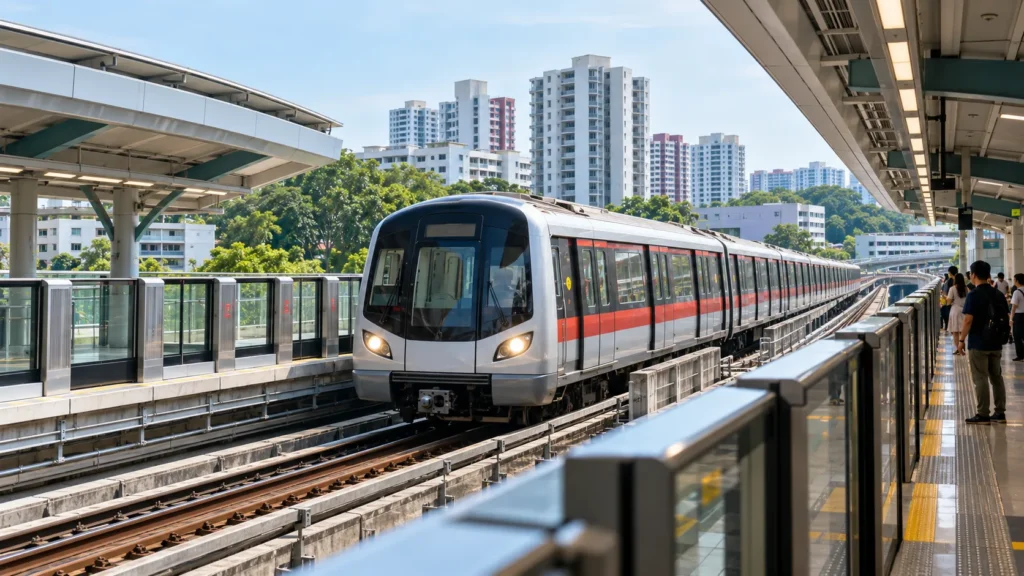
Singapore MRT Lines Explained
Singapore has six MRT lines, each serving different residential areas and activity centres. The table below highlights selected locations rather than every station on each route.
| MRT line | Code | Selected locations |
|---|---|---|
| North-South Line | NSL | Woodlands, Toa Payoh, Orchard, Marina Bay |
| East-West Line | EWL | Pasir Ris, Tampines, City Hall, Jurong East |
| North East Line | NEL | Punggol Coast, Sengkang, Chinatown, HarbourFront |
| Circle Line | CCL | Bishan, Buona Vista, HarbourFront, Marina Bay |
| Downtown Line | DTL | Bukit Panjang, Bukit Timah, Bugis, Downtown |
| Thomson-East Coast Line | TEL | Woodlands North, Orchard, Marina Bay area, East Coast |
1. North-South Line (NSL)
The North-South Line connects northern residential areas with central Singapore. It serves places such as Woodlands, Toa Payoh and Orchard, making it useful for commuters travelling towards the city centre.
2. East-West Line (EWL)
This line connects eastern and western parts of Singapore. Stations such as Pasir Ris, Tampines and Jurong East serve residential communities and major transport connections.
3. North East Line (NEL)
The North East Line serves areas including Punggol Coast, Sengkang, Chinatown and HarbourFront. It is useful for reaching northeastern neighbourhoods and destinations around the city.
4. Circle Line (CCL)
The Circle Line connects several residential and central areas, including Bishan, Buona Vista and Marina Bay. Its loop was completed on 12 July 2026 with the opening of Keppel, Cantonment and Prince Edward Road stations.
5. Downtown Line (DTL)
The Downtown Line links Bukit Panjang and Bukit Timah with Bugis and the Downtown area. It offers another way to reach central business and shopping districts.
6. Thomson-East Coast Line (TEL)
The TEL serves northern and central areas, including Woodlands North and Orchard, and extends towards the East Coast. Check the latest LTA map for the operational route and station connections before travelling.
Singapore LRT Network and Residential Connections
Singapore also has three LRT systems: Bukit Panjang LRT, Sengkang LRT and Punggol LRT. Unlike the MRT, which connects major parts of the island, these services mainly provide local connections within residential towns and link neighbourhoods with nearby MRT stations.
For example, residents in Bukit Panjang can use the local LRT to connect with the Downtown Line. Sengkang and Punggol residents can use their respective LRT services to reach MRT connections and nearby amenities.
Check the official map before setting off, as individual LRT loops may have different service arrangements during maintenance or planned closures.
Major Singapore MRT Interchange Stations
Interchange stations let you change from one MRT line to another. Some are busy, especially during weekday morning and evening peak periods, so allow time to reach your connecting platform.
| Station | Connecting lines |
|---|---|
| Dhoby Ghaut | North-South, North East and Circle |
| Bishan | North-South and Circle |
| Serangoon | North East and Circle |
| Bugis | East-West and Downtown |
| Marina Bay | North-South, Circle and Thomson-East Coast |
| HarbourFront | North East and Circle |
When changing trains, follow the signs for your connecting line rather than relying only on the station name. Check the direction of the next train, too. Some transfers involve a longer walk between platforms, and that extra time can matter if you have a tight connection.
For less familiar routes, check the full station code and destination displayed on the train. It is a simple habit that can prevent an unnecessary detour.

Singapore Train Fares and Payment Methods
MRT and LRT fares in Singapore are distance-based, so the price depends on the journey rather than just the number of stations. You can check the exact fare using the official SimplyGo travel information.
| Payment method | How it works |
|---|---|
| Contactless bank card | Tap the same supported card when entering and exiting |
| Mobile wallet | Use a supported card stored in a compatible wallet |
| EZ-Link or SimplyGo EZ-Link card | Use an eligible travel card and check its balance |
| Concession card | Available to eligible cardholders under applicable rules |
| Singapore Tourist Pass | Check the pass’s validity, coverage and travel conditions before buying |
Supported contactless cards include Visa, Mastercard, American Express and NETS, subject to the applicable card and payment rules. Mobile wallet options include Apple Pay and Google Pay, among others.
A note for visitors: A foreign-issued contactless bank card carries an additional S$0.60 administrative fee per day of use under the published SimplyGo rules. Your bank may also charge its own foreign transaction fees.
For a quick price reference, SimplyGo’s published adult card-fare table, updated on 27 December 2025, lists fares from S$1.28 for journeys up to 3.2 km to S$2.57 for journeys over 40.2 km. These are reference fares, not a substitute for checking the current price of your specific trip.
Changi Airport MRT and Popular Train Routes
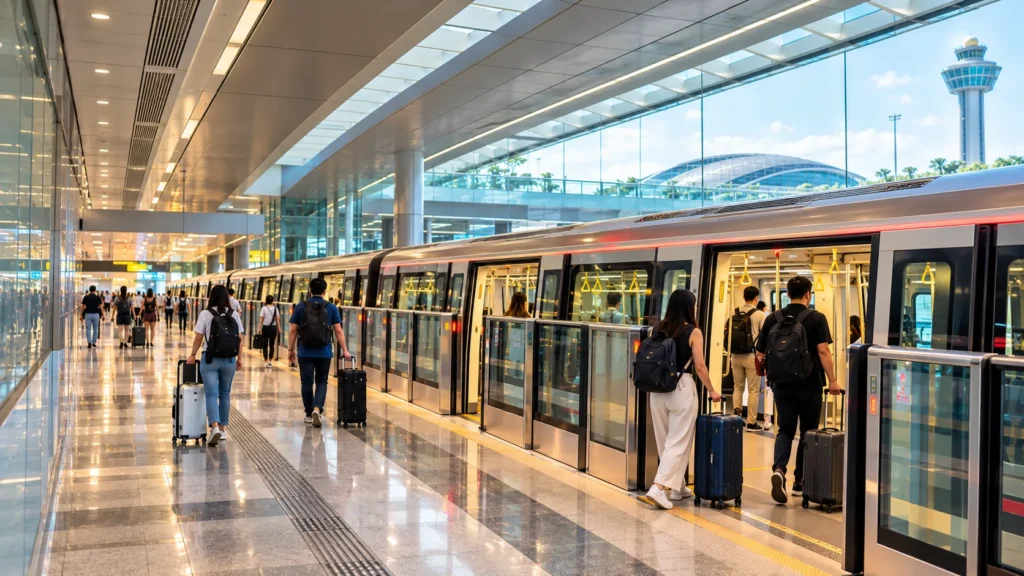
Changi Airport has an MRT station serving passengers travelling between the airport and other parts of Singapore. For many journeys towards the city, passengers use the East-West Line connection at Tanah Merah. Check the current map and journey planner for your destination and any service changes.
For places such as Orchard, Bugis, Chinatown and Marina Bay, enter your starting station and destination into the journey planner to compare routes and travel times. The route with the fewest stops is not always the easiest option; a direct connection or a shorter interchange walk may suit you better.
If you’re arriving with luggage, allow extra time to reach platforms and transfer between lines. Airport journeys can involve a change of train, depending on your destination.
Singapore MRT Operating Hours and Travel Tips
Train operating hours vary by line, station and service. Rather than relying on a general start or end time, check the first and last train information for your station on the relevant operator’s website or official transport resources.
A few practical tips can make your trip easier:
- Check service announcements before travelling, especially during planned maintenance.
- Allow extra time during weekday peak periods.
- Keep your payment card or device ready at the fare gates.
- Use the same payment method when tapping in and out.
- Check the platform direction before boarding.
- If a service is disrupted, look for official alternative-route advice.
The LTA train map and SimplyGo travel guide are useful places to check routes, fares and travel information.
Future Singapore Rail Network Expansion
Singapore’s rail network continues to grow, with new lines planned to improve connections between residential areas and major destinations. The Jurong Region Line (JRL) is targeted to begin opening in stages from 2027, while the Cross Island Line (CRL) Phase 1 is targeted for 2030.
These are future projects, not fully operational MRT lines. Check LTA announcements for the latest opening dates before planning a journey around a new station.
Frequently Asked Questions
How many MRT lines are there in Singapore?
Singapore has six MRT lines: North-South, East-West, North East, Circle, Downtown and Thomson-East Coast. LRT services provide extra connections within selected residential towns.
What is the difference between MRT and LRT in Singapore?
The MRT connects major areas across Singapore, while LRT services mainly connect residential neighbourhoods with nearby MRT stations and local destinations.
How much does a Singapore MRT ride cost?
Adult fares depend on distance travelled and payment type. Check the current fare for your route using the SimplyGo travel guide.
Can tourists use contactless bank cards on Singapore trains?
Yes, supported contactless bank cards and compatible mobile wallets can be used. Visitors using foreign-issued bank cards should check the applicable administrative fee and their bank’s charges before travelling.
What time do Singapore MRT trains start and stop?
Timings vary by line and station. Check the relevant train operator’s latest first and last train information before making an early-morning or late-night journey.
Where can I download the Singapore train network map?
Visit the official LTA MRT/LRT map to view the current network and check service information.
Conclusion
The Singapore Train Network connects residential towns, business districts and popular destinations through MRT and LRT services. Check the latest rail map, compare connecting routes, confirm your fare and review service timings before travelling. A little preparation can make your next journey around Singapore easier.
[…] neighbourhoods, shopping districts and popular attractions without relying on taxis. This Singapore Train Guide covers the MRT and LRT systems, train map, fares, payment methods and routes from Changi Airport […]